

Oil change turnaround time is defined as the total time from your arrival at a service location to the moment you drive away, covering both wait time and the mechanical work itself. Average service times range from 15–20 minutes at quick-lube centers to 30–45 minutes or more at dealerships, with independent shops landing in the middle at 20–30 minutes. Understanding what drives those differences helps you plan smarter, avoid unnecessary delays, and keep your vehicle on a reliable maintenance schedule. The oil change turnaround time factors covered in this guide apply whether you drive a compact sedan or a full-size truck.
What are the primary oil change turnaround time factors?
Service location type is the single biggest driver of how long an oil change takes. A quick-lube center like Jiffy Lube or Valvoline Instant Oil Change is built around throughput, with dedicated bays and technicians trained to move fast. An independent shop handles a wider range of repairs, so your vehicle may sit in a queue behind brake jobs and diagnostics. A dealership bundles oil changes with multi-point inspections, paperwork, and higher customer volume, which is why dealership oil changes regularly run 30–60 minutes or longer.
Beyond location, several mechanical and operational factors shape oil change duration:
- Engine size and oil volume. Larger engines hold more oil, which means longer drain times. A four-cylinder compact drains faster than a V8 truck engine holding 7–8 liters.
- Oil filter placement. Filters tucked behind skid plates or in tight engine bays require extra access time. Unfamiliar vehicle layouts can add 5–10 minutes before a wrench even touches the drain plug.
- Oil type. Conventional oil drains faster than full synthetic. Synthetic oil’s higher viscosity means it flows more slowly at drain temperature, adding a few minutes to the process.
- Technician experience and crew size. A two-person team working a dedicated bay completes the job faster than a solo technician juggling multiple vehicles.
- Add-on services. Tire pressure checks, fluid top-offs, and multi-point inspections are valuable, but each one adds time to the visit.
- Walk-in vs. appointment. Walk-ins wait for the next available bay. Appointments slot you into a scheduled workflow, which cuts idle time significantly.
- Peak hours. Saturday mornings and weekday lunch hours are the busiest periods at most shops. Visiting during off-peak hours like Tuesday through Thursday afternoons can reduce your total wait by 30–45 minutes.
Pro Tip: Call ahead and ask how many vehicles are currently in queue. Most shops will give you an honest answer, and that 60-second call can save you a 40-minute wait.
How does service setting affect oil change speed?
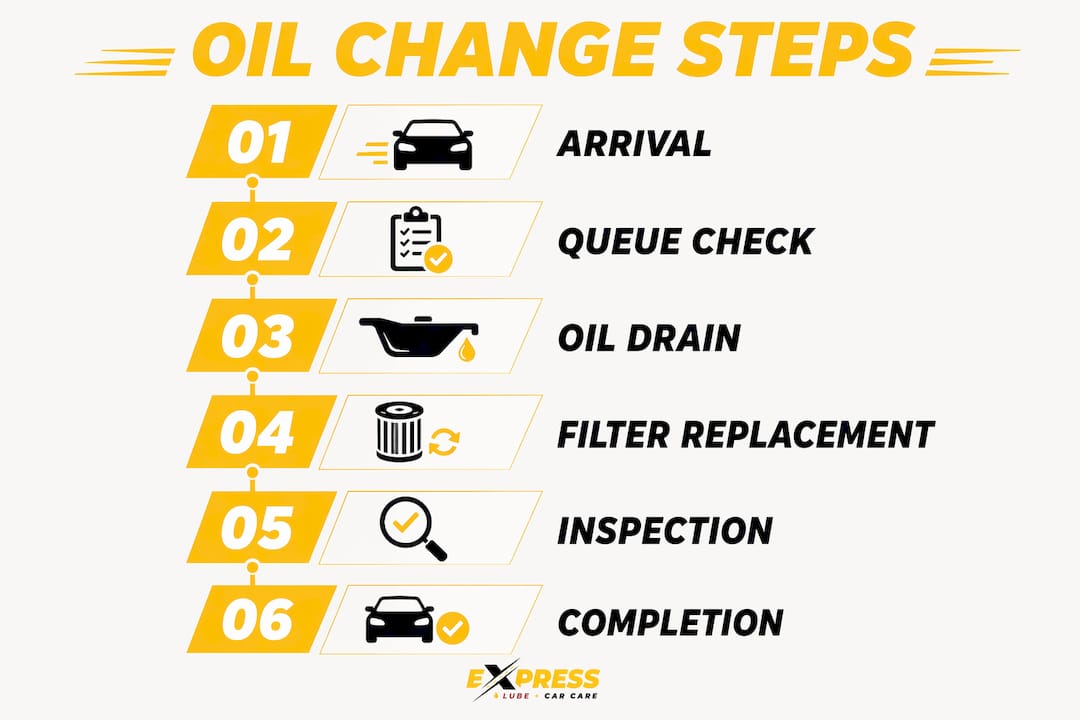
The service setting you choose directly trades speed against scope of inspection. Quick-lube centers prioritize throughput. Dealerships prioritize bundled service. Independent shops fall somewhere in between, often offering more personalized attention without the dealership’s volume delays.
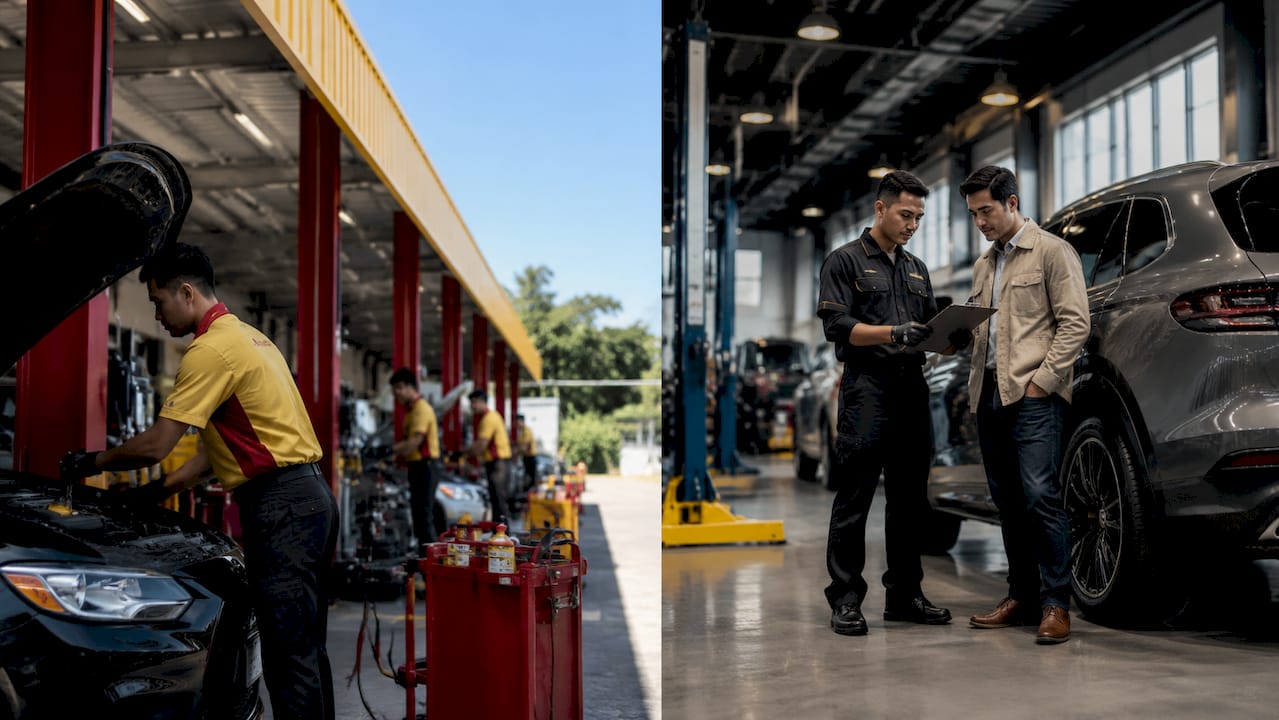
The table below compares typical oil change duration and cost by service type:
| Service Type | Typical Duration | Typical Cost Range | Inspection Included? |
|---|---|---|---|
| Quick-Lube Center | 15–20 minutes | $40–$80 | Basic check only |
| Independent Shop | 20–30 minutes | $50–$100 | Often yes |
| Dealership | 30–60+ minutes | $70–$150 | Yes, multi-point |
| DIY | 45 min–2 hours | $25–$60 (parts) | Owner’s discretion |
Dealership delays stem from volume and bundled services, not from any lack of skill. When a service advisor adds a tire rotation, cabin air filter check, and brake inspection to your oil change ticket, each step takes real time. That is not padding. It is a more thorough look at your vehicle. The trade-off is that you spend more time in the waiting room.
Quick-lube centers earn their reputation for speed by standardizing the process. Technicians handle one task at a time in a dedicated bay, and the workflow is designed to minimize transitions. For a comparison of quick-lube vs. dealership services, the differences in scope and timing are more significant than most drivers realize.
Pro Tip: If your vehicle is newer and in good condition, a quick-lube visit makes sense for routine oil changes. If your car has over 75,000 miles or you have not had a full inspection recently, the extra time at a dealership or independent shop pays off.
What vehicle-specific aspects affect oil change duration?
Your vehicle’s design has a direct impact on how long an oil change takes, independent of where you go or who performs the service. High-displacement engines holding 6–8 liters of oil take measurably longer to drain than four-cylinder engines holding 4–5 liters. That difference alone can add 5–10 minutes to the mechanical portion of the job.
Here are the vehicle-specific factors that add time most consistently:
- Skid plates and undercarriage guards. Trucks and SUVs with factory or aftermarket skid plates require removal before accessing the drain plug. This step alone adds 5–10 minutes.
- Oil filter location. Some vehicles, including certain BMW and Volkswagen models, place the oil filter canister in a position that requires draining residual oil carefully to avoid spills. That process cannot be rushed.
- Synthetic oil viscosity. Synthetic oils drain more slowly than conventional oil because of higher viscosity at operating temperature. If your vehicle requires full synthetic, factor in a slightly longer drain cycle.
- Oil capacity. Performance vehicles and diesel trucks often require 8–10 quarts. Filling that volume takes longer than topping off a 4-quart compact engine.
- Drain plug condition. A stripped or overtightened drain plug requires careful handling and sometimes a replacement plug, adding unplanned time to the visit.
Knowing your vehicle’s specific requirements before you arrive helps the technician prepare the right oil type and filter in advance. That preparation alone can shave 5 minutes off your visit.
How can scheduling cut your total wait time?
Smart scheduling is the most underused tool for reducing average oil change wait time. Booking an appointment instead of walking in removes the single largest variable in your total visit time: the queue. When you have a scheduled slot, the shop can stage your oil and filter before you arrive.
Follow these steps to minimize your time at the shop:
- Book midweek, midday. Tuesday through Thursday between 2 PM and 4 PM consistently sees the lowest traffic at most service locations. Avoid Saturday mornings and Monday lunch hours.
- Arrive five minutes early. Early arrival gives the service advisor time to pull your vehicle history and confirm the correct oil specification before your bay opens.
- Provide your vehicle history upfront. Tell the advisor your current mileage, the oil type your manufacturer specifies, and any recent service work. This prevents back-and-forth that delays the start of service.
- Decide on add-ons before you arrive. If you know you want a tire rotation or cabin filter replacement, say so when you book. If you do not want add-ons, say that too. Deciding at the counter slows the workflow for everyone.
- Use online scheduling tools. Many shops, including Express Lube & Car Care, offer same-day scheduling options that let you pick your time slot and confirm your vehicle details in advance.
Pro Tip: Bring a photo of your current oil cap or owner’s manual page showing the recommended oil specification. It takes 10 seconds and eliminates one of the most common causes of service delays.
Common misconceptions about oil change speed
The fastest oil change is not always the best one. This is the most important thing to understand about oil change service efficiency. Quick changes that skip inspection steps may leave residual sludge in the engine if the oil is not fully drained, and they miss the technician observations that catch developing problems early.
Here are the most common misconceptions vehicle owners carry into the shop:
- “A 10-minute oil change is just as good as a 30-minute one.” Mechanical wrench time for an oil change is typically 20–40 minutes when done correctly. A 10-minute service almost certainly skips steps.
- “Inspections are just upsells.” A multi-point inspection catches worn belts, low brake fluid, and tire wear patterns that you would not notice on your own. Skipping it to save time is a false economy.
- “Synthetic oil means I can wait longer between changes.” Modern intervals are often 7,500–10,000 miles for synthetic oil, but severe driving conditions shorten that window. Short trips, towing, and extreme heat all accelerate oil degradation.
- “Walk-ins are just as fast as appointments.” Walk-in wait times depend entirely on how many vehicles are ahead of you. An appointment removes that uncertainty.
The 30–45 minute service window that includes a proper drain, filter replacement, fluid check, and basic inspection is the standard that protects your engine long-term. Anything significantly faster should prompt a question about what was skipped.
Key takeaways
Oil change turnaround time is controlled by service location, vehicle design, scheduling choices, and shop workflow, not by any single factor alone.
| Point | Details |
|---|---|
| Service location drives the biggest time difference | Quick-lube centers average 15–20 minutes; dealerships regularly run 30–60 minutes or more. |
| Vehicle design adds unavoidable time | Skid plates, large oil capacity, and synthetic oil viscosity each add 5–10 minutes to service. |
| Appointments cut wait time significantly | Booking midweek afternoons and arriving early removes the queue variable entirely. |
| The 30–45 minute window is the quality standard | Services shorter than 20 minutes likely skip inspection steps that protect long-term engine health. |
| Inspections prevent costly future repairs | Skipping a multi-point check to save a few minutes risks missing problems that cost far more to fix later. |
What we’ve learned from thousands of oil changes
At Express Lube & Car Care, we see the full range of oil change expectations every week. Some drivers want to be in and out in 15 minutes. Others want every fluid checked and every filter inspected. Both are reasonable priorities, and neither is wrong. What we have learned is that the drivers who get the most value from a service visit are the ones who understand what they are asking for before they pull into the bay.
The 30–45 minute service window is not padding. It is the time it takes to drain oil completely, replace the filter correctly, check fluid levels, inspect tire pressure, and give the technician a moment to note anything unusual under the hood. Rushing that process does not save your engine anything. It just delays the discovery of a problem that is already developing.
We also see a pattern with vehicle-specific delays. Truck owners are often surprised when their oil change takes longer than their neighbor’s sedan service. A diesel truck with a skid plate, 10 quarts of synthetic oil, and a canister-style filter in a tight location simply takes more time. That is physics, not inefficiency. Knowing your vehicle’s requirements and communicating them upfront makes the entire process smoother for everyone.
The advice we give every driver is this: prioritize a shop with ASE-certified technicians, ask what the inspection includes, and book an appointment when you can. Speed matters, but not more than getting the job done right.
— Express Lube & Car Care
Get in and out faster at express lube & car care
Express Lube & Car Care in Haltom City is built for drivers who want both speed and quality without choosing between them. Our ASE-certified technicians handle oil changes with no appointment required, and every service includes a multi-point inspection so you leave knowing your vehicle’s full condition. We stock the most common oil types and filters in advance, which means less waiting and more doing.
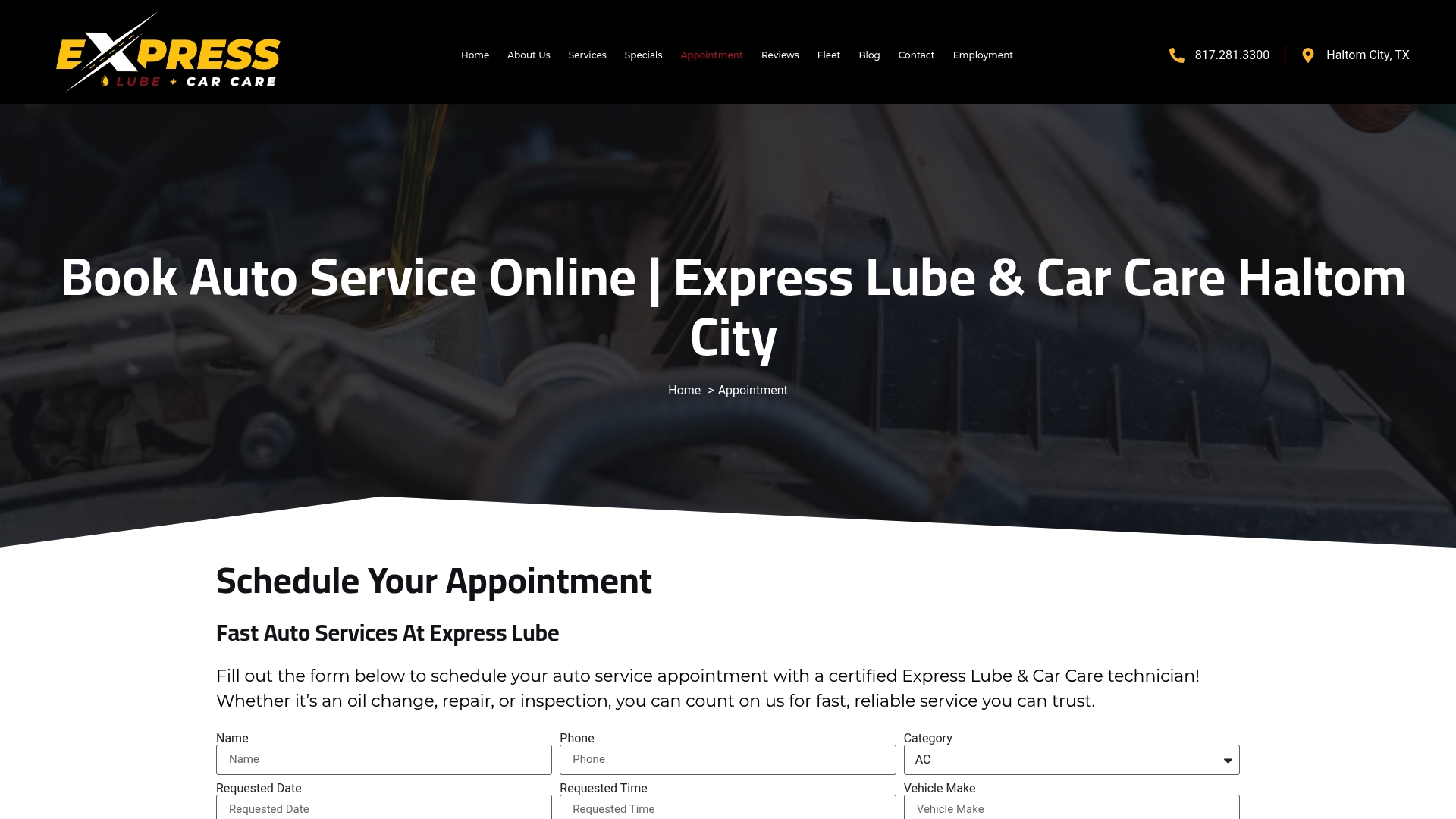
If your vehicle needs more than an oil change, our engine diagnostics and repair services cover everything from warning light diagnosis to full engine repair, all under one roof in Haltom City. RepairPal certification backs every service we perform, so you can trust the work and the price. Stop in any day of the week or book your visit online and get back on the road with confidence.
FAQ
How long does an average oil change take?
Average oil change times range from 15–20 minutes at quick-lube centers to 30–60 minutes at dealerships, with independent shops typically completing service in 20–30 minutes. DIY oil changes take 45 minutes to 2 hours depending on experience and vehicle access.
What makes an oil change take longer than expected?
Non-mechanical delays like service queues, unfamiliar vehicle layouts, skid plate removal, and administrative paperwork often add more time than the actual wrench work. Arriving without an appointment during peak hours is the most common cause of a longer-than-expected visit.
Does synthetic oil make an oil change take longer?
Yes. Synthetic oil drains more slowly than conventional oil due to higher viscosity, which adds a few minutes to the drain cycle. Vehicles with large oil capacities, like trucks and performance cars, see the most noticeable difference.
Is a faster oil change better for my vehicle?
A faster service is not better if it skips steps. The 30–45 minute service window is considered the standard for a complete oil change with inspection. Services completed in under 15 minutes likely omit the full drain cycle or skip the multi-point check.
How often should i get an oil change in 2026?
Most modern vehicles using synthetic oil follow a 7,500–10,000 mile interval, but severe driving conditions like frequent short trips, towing, or extreme heat shorten that window. Even low-mileage vehicles should have their oil changed at least twice per year.