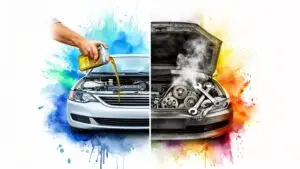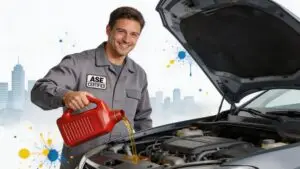

A mechanic’s second opinion is defined as an independent diagnostic evaluation or repair estimate from a shop that has no connection to the first. Getting a second opinion on car repair when needed protects you from paying for unnecessary work, catching incorrect diagnoses before they cost you thousands. Second opinions are a standard, financially prudent practice that can save real money when initial diagnoses are wrong. AAA’s Club Alliance calls them a smart financial habit, not a sign of distrust. Any repair estimate over $500, a vague diagnosis, or a recurring problem after previous work are all clear signals to get a second set of eyes on your vehicle.
When should you seek a second opinion for car repairs?
The clearest trigger for a mechanic second opinion is a repair estimate that feels too high or too vague. Diagnostic fees typically range from $50 to $150, which is a small price to pay before committing to a $1,200 brake job or a $2,500 transmission repair. That fee is your insurance policy against an incorrect or inflated diagnosis.
These situations call for a second opinion without hesitation:
- Estimates over $500. Any repair in this range warrants independent verification before you authorize work.
- Safety-critical systems. Brakes, steering components, and transmissions affect your life on the road. Get confirmation before touching these.
- Vague or high-pressure diagnoses. A shop that cannot explain what failed, why it failed, or what the repair involves is a shop you should not trust blindly.
- Recurring problems. If the same issue returns after a previous repair, the root cause was likely misdiagnosed the first time.
- Unusually large diagnostic fees. A diagnostic charge well above the $50–$150 standard range deserves scrutiny on its own.
Consumer protection law backs you up here. Most states require written estimates before repairs begin, with final charges capped at a set percentage above the estimate before re-authorization is required. Knowing that right exists gives you the confidence to slow down and verify before you sign anything.
Pro Tip: If a service advisor tells you the car is “dangerous to drive” without showing you photos, measurements, or fault codes, treat that as a pressure tactic, not a diagnosis.
What to bring when asking for a second opinion
Preparation determines how useful your second auto repair evaluation will be. Walking into a shop without the right information wastes your time and theirs.

| What to bring | Why it matters |
|---|---|
| Vehicle history and mileage records | Gives the second mechanic context without revealing the first shop’s conclusions |
| Any warning lights or fault codes you observed | Helps the technician focus the diagnostic without being led by another shop’s findings |
| A written list of symptoms | Keeps your description consistent and prevents you from accidentally anchoring the mechanic |
| Previous repair invoices (if relevant) | Shows what work was already done, which can reveal recurring failures |
| Your authorization to run an independent diagnostic | Confirms you want a fresh evaluation, not just a quote review |
The most important rule: never disclose the first shop’s findings or estimate before the second mechanic completes their own inspection. Anchoring bias causes technicians to unconsciously confirm what they have already been told, which defeats the entire purpose of a second opinion. Let the second shop reach its own conclusions first.
Pro Tip: Ask specifically for a documented diagnostic report with fault codes, measurements, and photos. Requesting diagnostic evidence like photos or fault codes is far more effective than simply asking for a price comparison.
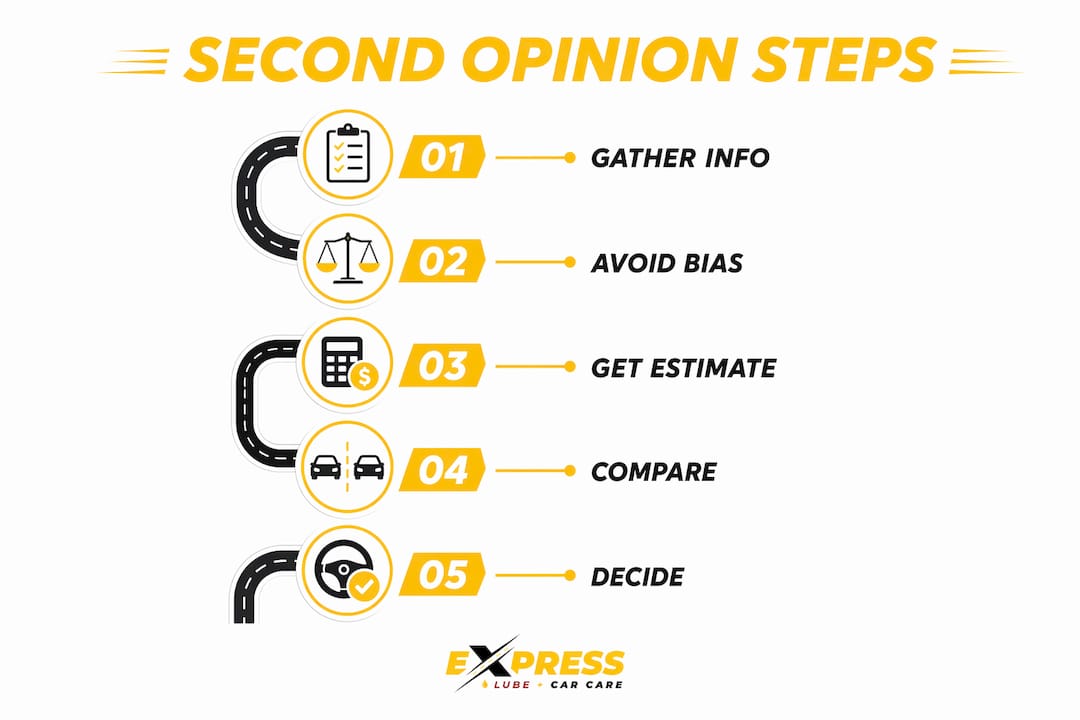
How to get and evaluate a second opinion step by step
A structured approach turns a stressful situation into a clear, manageable process. Follow these steps in order.
-
Find a certified shop. Look for ASE-certified technicians and RepairPal-certified facilities. Certification means the shop meets documented standards for training and repair quality. Check reliable auto shop qualities before you book.
-
Schedule an independent diagnostic visit. Call ahead and explain that you want a full diagnostic evaluation, not a quote review. Be clear that you will pay the diagnostic fee.
-
Pay the diagnostic fee without hesitation. Diagnostic fees are a cost-effective safeguard against large, unnecessary repairs. A $100 fee that saves you from a $1,500 mistake is money well spent.
-
Receive the written report before discussing price. Ask the technician to walk you through their findings with supporting evidence: photos, fault codes, and measurements. Do not let the conversation jump straight to cost.
-
Compare diagnoses line by line. Place both written estimates side by side. Auto repair pricing varies widely based on parts sourcing, labor rates, and shop overhead. Differences in parts type (OEM versus aftermarket) and flat-rate labor times explain many price gaps.
-
Ask about discrepancies directly. If one shop recommends a repair the other did not mention, ask both shops to explain their reasoning. A confident, transparent shop will welcome the question.
-
Communicate your decision calmly. Once you choose a shop, inform the other professionally. You owe no explanation, and a reputable shop will not pressure you.
When evaluating the two reports, watch for these positive signs in the shop you choose:
- Written, itemized estimate with parts and labor listed separately
- Clear explanation of why each repair is necessary
- Willingness to show you the damaged component or the fault code
- No pressure to decide immediately
Red flags to watch for when getting a second opinion
Not every shop offering a second opinion is actually giving you one. Some practices undermine the process entirely.
A shop that refuses to provide a written, itemized estimate or discourages you from seeking another opinion is telling you something important about how it operates. Transparent shops expect and welcome customer questions about parts, labor, and failures as a normal part of their workflow, not as a challenge to their authority.
Watch for these specific red flags:
- No written estimate. Verbal quotes are unenforceable and easy to change after the fact.
- No diagnostic evidence. A shop that cannot show you photos, fault codes, or measurements has not actually diagnosed your vehicle.
- Scare tactics. Phrases like “your car could fail at any moment” without supporting evidence are pressure tools, not safety warnings.
- Free second opinion offers that skip the diagnostic. A shop that only reviews the first shop’s estimate without inspecting your car is not giving you an independent opinion.
- Sharing the first shop’s diagnosis too early. If you accidentally reveal the first estimate, anchoring bias may cause the second mechanic to confirm it rather than evaluate independently.
- No breakdown of parts type. OEM and aftermarket parts carry different costs and quality levels. A shop that does not specify which parts it uses is hiding information you need.
Recognizing these patterns early saves you from making a rushed decision under pressure. When you see them, step back and find a different shop for your evaluation.
How consumer protection laws support fair car repair estimates
Your legal rights as a car owner are stronger than most drivers realize. State laws require written estimates before repairs begin, and most cap the final charge at no more than 10% above the estimate before the shop must contact you for re-authorization. These thresholds typically activate at repair costs between $100 and $500 depending on the state.
A critical distinction protects you at every visit: signing for a diagnostic is not approval for repairs. You retain the full right to decline any repair after receiving diagnostic results. No shop can legally proceed with work beyond what you have authorized in writing.
Practical steps to protect yourself:
- Request an itemized written estimate before authorizing any work beyond the diagnostic.
- Confirm the authorization scope in writing. Specify exactly what you are approving, nothing more.
- Ask for proof before committing. Photos, fault codes, and measurements are your right to request. A guide to verifying auto repair estimates walks you through the full process.
- Dispute unauthorized charges in writing. If a shop bills you for work you did not approve, your state’s consumer protection statute gives you grounds to challenge it.
Pro Tip: Treat every estimate as a negotiating document. Consumers can compare line items and question discrepancies between shops. Different shops may quote different parts, different labor hours, or recommend entirely different services for the same symptom.
Key Takeaways
Getting a second opinion on car repairs is a financially sound, legally supported practice that protects you from incorrect diagnoses, inflated estimates, and unauthorized charges.
| Point | Details |
|---|---|
| Know when to seek a second opinion | Get one for any estimate over $500, safety-critical repairs, vague diagnoses, or recurring problems. |
| Withhold the first diagnosis | Never share the first shop’s findings before the second mechanic completes an independent inspection. |
| Pay the diagnostic fee | A $50–$150 diagnostic fee is a reliable safeguard against large, unnecessary repair costs. |
| Demand written, itemized evidence | Request fault codes, photos, and measurements before approving any repair work. |
| Know your legal rights | Signing for a diagnostic does not authorize repairs; state law requires written estimates and re-authorization above set thresholds. |
What years of watching second opinions play out have taught us
At Express Lube & Car Care, we have seen drivers walk in with estimates for repairs their vehicles did not need. A customer once brought in a quote for a full transmission replacement after a warning light appeared. Our ASE-certified technicians ran an independent diagnostic and found a faulty sensor, a repair that cost a fraction of the original estimate. That kind of outcome is not rare. It is what happens when a driver slows down and asks for a second look.
The uncomfortable truth about second opinions is that most drivers avoid them because they feel awkward, like they are accusing the first shop of dishonesty. That framing is wrong. A second opinion is not an accusation. It is a standard financial decision, the same way you would get a second quote on a home repair or a medical procedure.
We also want to be honest about the cost side. Paying two diagnostic fees feels wasteful in the moment. But a $100 fee that prevents a $1,500 unnecessary repair is not a cost. It is a return. The drivers who skip the second opinion to save $100 are often the ones who call us later, frustrated that the original problem was never actually fixed.
The shops worth trusting are the ones that encourage you to verify their work. Transparency is not a sales tactic. It is how good mechanics operate every day.
— Express Lube & Car Care
Honest diagnostics and second opinions at Express Lube & Car Care
Drivers in the DFW area deserve straight answers, not pressure tactics or vague explanations.
Express Lube & Car Care provides written, itemized estimates backed by documented diagnostic evidence, including fault codes and photos, so you always know exactly what you are paying for and why. Our ASE-certified technicians and RepairPal certification mean every diagnosis meets a documented standard of accuracy. No appointment is needed. You can walk in, request an engine diagnostic in Haltom City, and leave with a clear, honest report. If you want to compare that report with another shop’s findings, we support that decision. Visit Express Lube & Car Care to schedule your visit or simply stop by when it works for you.
FAQ
When should I get a second opinion on a car repair?
Seek a second opinion for any repair estimate over $500, safety-critical systems like brakes or steering, recurring problems after previous repairs, or any diagnosis that feels vague or rushed. Diagnostic fees of $50–$150 make verification affordable relative to the cost of unnecessary repairs.
Should I tell the second mechanic what the first shop said?
No. Withholding the first shop’s diagnosis prevents anchoring bias, which can cause a second mechanic to confirm the original findings without performing a truly independent evaluation.
Does signing for a diagnostic mean I have to approve the repair?
No. Diagnostic authorization does not bind you to repair acceptance. You retain the full right to decline any repair after reviewing the diagnostic results.
What should a legitimate repair estimate include?
A legitimate estimate lists parts and labor separately, specifies whether parts are OEM or aftermarket, and ties each repair recommendation to documented evidence such as fault codes, photos, or measurements. Professional shops justify urgent repairs with evidence, not verbal pressure.
How do I find a trustworthy shop for a second opinion?
Look for ASE-certified technicians, RepairPal certification, and shops that provide written estimates without being asked. Reviewing a neighborhood auto shop evaluation guide gives you a structured checklist for comparing local options before you commit.