

Location is the single most influential factor in how drivers choose car care services. The role of proximity in car care choice goes beyond simple convenience. It shapes how often you get your vehicle serviced, how loyal you stay to a provider, and how quickly you respond to warning signs. Industry data from JudgeService and Ducker Carlisle confirms that distance from a service facility directly predicts both purchase behavior and long-term retention. Understanding this connection helps you make smarter, faster decisions about local car maintenance choices.
How proximity affects your car care decisions
Distance from a service facility does not just affect travel time. It changes how often you actually follow through on maintenance. 51% of buyers within 5 miles of a dealership purchase service plans, compared to just 25% of buyers located more than 50 miles away. That gap reflects a simple truth: the closer the shop, the lower the mental and logistical barrier to scheduling service.
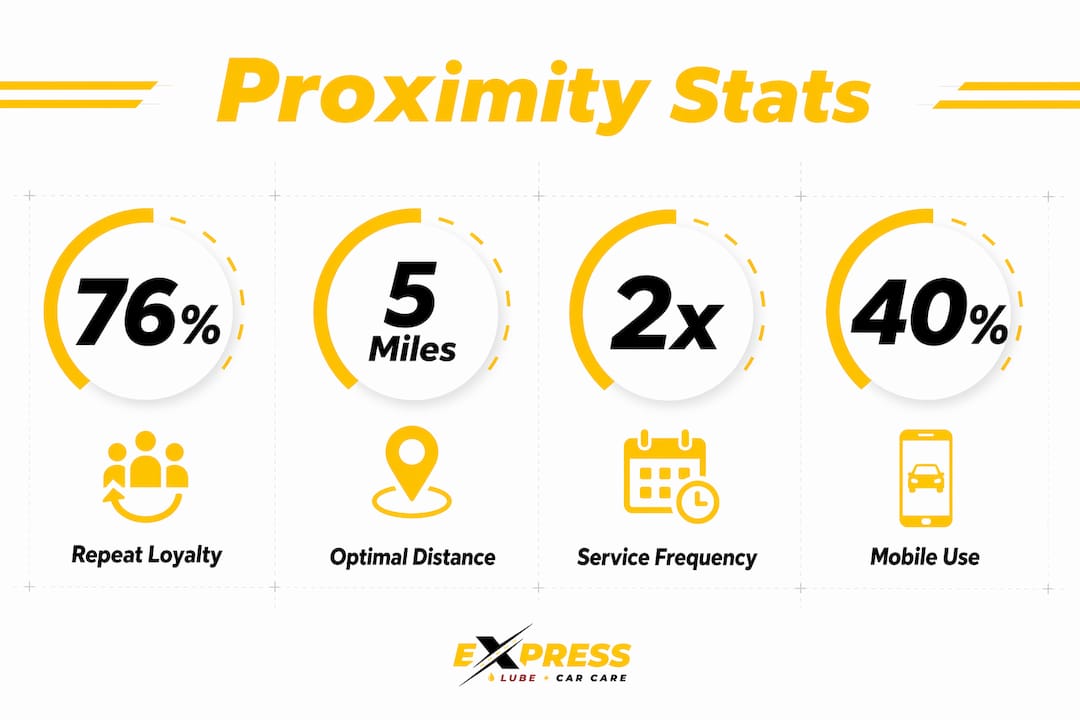
Loyalty follows the same pattern. 76% of repeat buyers stay with the dealer that performed their prior service. That retention rate is not driven by brand attachment alone. It is driven by the habit of returning to a place that is easy to reach. When a shop is nearby, you are more likely to return before a small issue becomes a costly repair.

The impact of distance on car services also shows up in which type of provider you choose. According to Ducker Carlisle’s 2026 Consumer Sentiment Survey, quick-service chains have overtaken dealer networks for routine maintenance. Dealer networks still lead in technical quality, but drivers consistently choose proximity-driven convenience over perceived expertise for oil changes, tire rotations, and filter replacements. That shift reflects a real change in how drivers weigh their options.
Proximity also reduces the friction that causes deferred maintenance. When your shop is on your commute route or near your workplace, you are far more likely to stop in when a dashboard light appears. That kind of low-friction access is exactly why convenience and location rank among the top attributes drivers use to select a repair shop, according to Consumer Reports.
- Drivers within 5 miles of a shop buy service plans at twice the rate of distant buyers
- Retention rates concentrate heavily around nearby service locations
- Quick-service chains gain market share specifically because of walk-in availability and proximity
- Routine maintenance compliance improves when a shop sits on a familiar daily route
Mobile vs. fixed-location shops: which is more convenient?
The rise of mobile auto service has added a new dimension to how proximity affects car care. Mobile mechanics come to your driveway or workplace, which eliminates the need to transport your vehicle entirely. Mobile service is ideal for busy parents and commuters who need routine or minor repairs handled without disrupting their schedule. For an oil change, battery swap, or brake pad inspection, a mobile technician can save you an hour or more.
However, mobile service has real limits. Weather, limited workspace, and job complexity all restrict what a mobile technician can safely complete. A transmission repair, engine diagnostic requiring a lift, or brake line replacement demands a controlled environment with specialized tools. Trying to handle those jobs in a parking lot creates safety risks and often produces incomplete results.
Fixed-location shops handle complex work better, but they require you to transport your vehicle and wait or arrange a ride. The optimal approach combines both formats based on what your vehicle actually needs. Use mobile service for diagnostics and routine maintenance. Use a fixed shop for anything requiring a lift, specialized equipment, or extended labor time.
- Mobile service works well for: oil changes, battery replacements, minor brake inspections, fluid top-offs, and basic diagnostics
- Fixed-location shops are necessary for: transmission work, suspension repairs, engine overhauls, alignment, and emissions testing
- Weather and space limitations make mobile service unreliable for jobs requiring more than one hour of labor outdoors
Pro Tip: Before booking a mobile mechanic, confirm the specific job complexity. Ask whether the repair requires a lift or specialized diagnostic equipment. If it does, a fixed shop will save you time and a second appointment.
For drivers evaluating mobile vs. fixed service, the decision comes down to repair type first and location second.
Does convenience mean more than just distance?
Proximity is the starting point for convenience in vehicle repairs, but it is not the whole picture. Traffic patterns, road access, and shop layout all affect how convenient a nearby location actually feels in practice. A shop that is 2 miles away but requires a left turn across four lanes of traffic during rush hour may feel less accessible than one that is 4 miles away with a direct right-in, right-out entry.
Sites with easy ingress and egress, good visibility, and low-speed access roads consistently outperform locations with higher raw traffic but poor entry points. That principle applies directly to how you evaluate a local shop. A slightly farther shop with a simple, stress-free entry often saves you more time than the closest option on the map.
| Convenience factor | What to look for |
|---|---|
| Raw distance | Shop within 5 miles of home or work |
| Traffic access | Easy entry and exit without crossing heavy traffic |
| After-hours access | Key drop box for early morning or late evening drop-off |
| Digital communication | Text or email updates that reduce the need for callbacks |
| First-time fix rate | Repairs completed correctly without a return visit |
Communication quality is another layer of convenience that drivers often overlook. Consumer Reports advises that trustworthy communication and accurate estimates can outweigh proximity when a nearby shop miscommunicates and causes scheduling disruptions. A shop that calls you with a surprise charge after you have already arranged a pickup creates more inconvenience than a slightly farther shop that keeps you informed throughout the process.
After-hours drop-off and proactive digital updates reduce the number of trips you need to make. That matters when your schedule is tight. A shop that texts you when your car is ready eliminates the need to call, wait on hold, or make an extra trip to check on progress.
Pro Tip: When evaluating a local shop, call them once before your first visit. How quickly they answer, how clearly they explain their process, and whether they give you a straight estimate tells you more about real convenience than their address does.
How to choose a local car care provider the right way
Choosing a nearby provider is a good starting point, but proximity alone does not protect your vehicle. The best local car maintenance choices combine location with a short checklist of reliability factors. Here is how to evaluate your options methodically.
- Confirm proximity to your daily route. A shop near your commute or workplace is more useful than one near your home if you spend most of your day away from home.
- Check for ASE certification. ASE-certified technicians meet a nationally recognized standard for diagnostic and repair competency. This credential matters for both routine and complex work.
- Look for RepairPal certification. RepairPal-certified shops commit to fair pricing and quality standards. That certification reduces the risk of overcharging on parts and labor.
- Evaluate communication practices. Ask whether the shop provides written estimates before starting work and whether they send updates by text or email.
- Assess first-time fix rates. Ask directly or check reviews for patterns of repeat visits for the same problem. A high first-time fix rate saves you time and money.
- Confirm no-appointment availability. Shops that accept walk-ins give you flexibility when something unexpected comes up during the week.
Drivers who find a local shop with these qualities build a maintenance habit that protects their vehicle over time. Consistency matters as much as quality for long-term vehicle health. When your shop is close, certified, and communicates clearly, you are far more likely to stay on schedule with oil changes, inspections, and seasonal checks.
The loyalty benefits of a trusted local provider compound over time. A shop that knows your vehicle’s history can spot developing problems faster than a new provider starting from scratch. That institutional knowledge is a real advantage, and it only builds when you return to the same location consistently.
Key takeaways
Proximity is the most reliable predictor of service frequency, loyalty, and maintenance consistency for drivers choosing car care providers.
| Point | Details |
|---|---|
| Distance drives frequency | Drivers within 5 miles of a shop buy service plans at twice the rate of distant buyers. |
| Loyalty concentrates locally | 76% of repeat buyers return to the shop that performed their prior service. |
| Mobile service has limits | Use mobile mechanics for routine work; fixed shops handle complex repairs requiring specialized equipment. |
| Access beats raw mileage | Easy entry and exit often matters more than the shortest distance on a map. |
| Communication is part of convenience | Accurate estimates and digital updates reduce trips and prevent scheduling disruptions. |
What we have learned from watching drivers choose
At Express Lube & Car Care, we see the proximity effect play out every week. Drivers who live or work within a few miles of our Haltom City location come in more often, catch problems earlier, and leave with vehicles in better condition than drivers who only visit when something goes wrong. That pattern is not coincidence. It is what the data predicts, and it is what we observe firsthand.
The part that surprises most drivers is how much access design matters. We have had customers tell us they drove past us for months before stopping in because the entry looked complicated from the road. Once they came in, they became regulars. That tells us the car care location importance conversation is not just about miles. It is about whether a driver feels confident pulling in without stress.
The trade-off between proximity and quality is real, but it is not as sharp as drivers often assume. A nearby shop with ASE-certified technicians, transparent pricing, and clear communication gives you both. The mistake is treating proximity and quality as opposites. The right local provider delivers both, and finding that combination is worth the extra 10 minutes of research before your first visit.
My honest recommendation: start with proximity, then filter by certification and communication. Do not settle for a shop that is close but unclear about pricing or slow to respond. The local auto shop advantage is real, but only when the shop earns your trust alongside your business.
— Express Lube & Car Care
Engine diagnostics and repairs close to home in Haltom City
Drivers in the DFW area know that engine problems do not wait for a convenient moment. Express Lube & Car Care provides engine diagnostics and repair in Haltom City, with ASE-certified technicians and RepairPal certification backing every diagnosis. No appointment is required for most services, which means you can stop in when the check engine light comes on without rearranging your week.
Transparent pricing and fast turnaround keep your downtime short. Whether you need a full diagnostic scan or a confirmed repair, Express Lube & Car Care gives you the proximity advantage without sacrificing quality. When your shop is nearby, certified, and communicates clearly, staying on top of your vehicle’s health becomes a realistic habit rather than a stressful task.
FAQ
Why does proximity matter so much in choosing a car care shop?
Proximity directly increases how often drivers follow through on maintenance. Drivers within 5 miles of a service facility are significantly more likely to purchase service plans and return for repeat visits than those farther away.
Are mobile mechanics a good substitute for a local shop?
Mobile mechanics work well for routine maintenance and minor repairs, but they cannot replace a fixed shop for complex work requiring a lift or specialized equipment. The best approach uses both formats based on the job.
What makes a nearby shop actually convenient beyond its location?
True convenience includes easy traffic access, after-hours drop-off, digital communication, and accurate estimates. A shop that is close but hard to enter or slow to communicate can be less convenient than one slightly farther away.
How do I know if a local shop is trustworthy?
Look for ASE certification, RepairPal certification, written estimates before work begins, and consistent positive reviews about communication. A certified mechanic nearby who communicates clearly is the most reliable combination.
Does choosing a nearby shop actually improve vehicle health over time?
Yes. Drivers who use a consistent local provider maintain their vehicles more regularly and catch developing problems earlier. A shop that knows your vehicle’s history can identify patterns that a new provider would miss entirely.