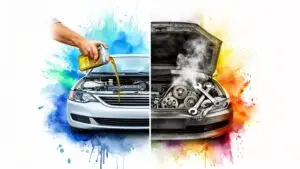

On most cars built in the last 20 years, an “engine tune up” is no longer a mechanical adjustment. It’s a scheduled maintenance visit or diagnostic inspection, guided by your owner’s manual and performed by ASE-certified technicians who know your vehicle’s specific intervals. If your check engine light is on, your mileage is climbing past a major milestone, or something just feels off, that’s your cue to schedule service.
Here’s what that typically looks like for most drivers:
- Modern vehicles (roughly 2000 and newer): No carburetor cleaning, no distributor points, no manual timing adjustments. Instead, expect spark plug replacement at mileage intervals recommended by the manufacturer, fluid checks, filter swaps, and an OBD-II diagnostic scan if warning lights are present.
- What a visit actually covers: Oil change, air and cabin filter inspection, battery check, tire rotation, brake inspection, and a multi-point review of belts and hoses.
- Who to trust: Look for ASE-certified technicians, a shop that follows your manufacturer’s maintenance schedule, and transparent line-item pricing before any work begins.
Express Lube & Car Care’s ASE-certified team uses your manufacturer’s maintenance schedule as the starting point, not a generic “tune-up” package, so you only pay for what your car actually needs.
Key Takeaways
Following your manufacturer’s maintenance schedule, backed by a proper OBD-II diagnostic scan when symptoms appear, is the most cost-effective approach to keeping your vehicle reliable.
| Point | Details |
|---|---|
| Modern tune-ups follow schedules | Replace the generic “tune-up” mindset with your owner’s manual intervals and targeted inspections. |
| Spark plugs last longer now | Platinum and iridium plugs typically run 60,000–100,000 miles; copper plugs wear faster. |
| Diagnostics before parts | A code is a clue; live-data testing confirms the root cause before any parts are replaced. |
| Know the warning signs | A flashing check engine light, rough idle, or colored exhaust smoke warrants immediate attention. |
| Express Lube & Car Care | ASE-certified technicians, digital vehicle inspections with photos, and same-day service in Haltom City. |
Table of Contents
- What does an engine tune up actually mean today?
- What’s included in a typical tune-up service visit?
- How much does a tune-up cost, and how long does it take?
- How often should you schedule a tune-up or maintenance visit?
- Signs your car needs service now, not later
- How to choose the right shop for your maintenance visit
- Why your owner’s manual beats a generic tune-up package
- Our perspective on what modern maintenance should look like
- Get your vehicle inspected at Express Lube & Car Care
- Sources
- FAQ
What does an engine tune up actually mean today?
The phrase “tune up” dates back to an era when engines needed regular mechanical calibration. Carburetors had to be adjusted, distributor points wore down and needed replacement, and ignition timing had to be set by hand. A tune-up back then was genuinely hands-on mechanical work.
That era is largely over. Kelley Blue Book explains that electronic ignition, long-life spark plugs, and onboard diagnostics have made the traditional tune-up obsolete for most vehicles. Your car’s ECU (engine control unit) self-adjusts fuel delivery and ignition timing continuously. There’s nothing to manually set.
| Task | Traditional Tune-Up (pre-1999) | Modern Scheduled Maintenance |
|---|---|---|
| Ignition timing | Manual adjustment required | ECU-controlled, self-adjusting |
| Carburetor | Cleaned and adjusted | Replaced by fuel injection |
| Distributor/points | Replaced regularly | Electronic ignition, no points |
| Spark plugs | Copper plugs, frequent replacement | Platinum/iridium, 60k–100k miles |
| Diagnostics | Visual inspection only | OBD-II scan, live-data testing |
| Filters | Basic air filter | Air, cabin, and fuel filters |
For most vehicles built in the last 20 years, the owner’s manual and the vehicle’s maintenance minder are the authoritative guides, not a once-a-year “tune-up” package.
Pro Tip: If you drive a classic car, a pre-1999 vehicle with a carburetor, or any vehicle with a mechanical ignition system, the traditional tune-up tasks still apply. A shop familiar with older vehicles is worth seeking out for those.
What’s included in a typical tune-up service visit?
Think of a modern tune-up as a car tune up checklist rather than a single procedure. Not every item gets done at every visit. What happens depends on your mileage, your symptoms, and what your owner’s manual calls for.
Common services a shop may inspect or perform:
- Oil and filter change: The most frequent maintenance item; interval depends on oil type and driving conditions.
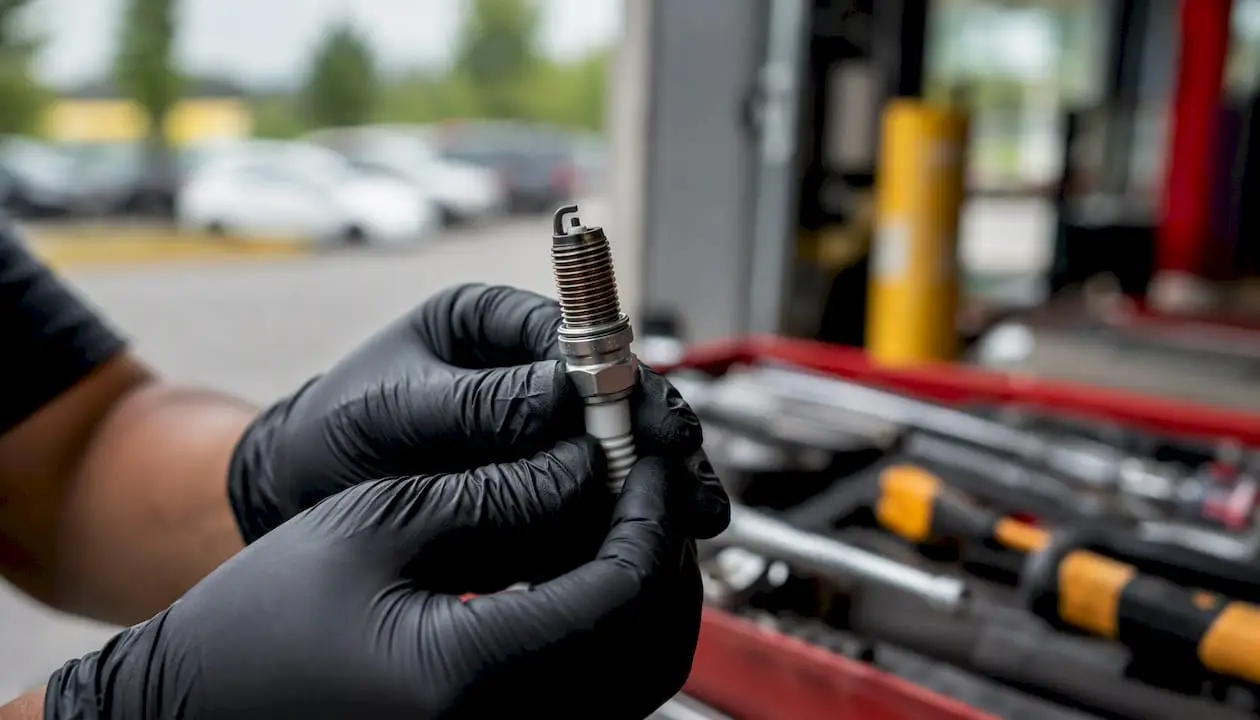
- Spark plug inspection or replacement: Platinum and iridium plugs typically last a long time; copper plugs wear faster.
- Air filter: Replaced based on mileage or visible condition; a clogged filter hurts fuel economy.
- Cabin air filter: Often overlooked; affects HVAC airflow and interior air quality.
- Fuel filter: Replacement intervals vary by vehicle; some are integrated into the fuel pump assembly.
- Belts and hoses: Visual inspection for cracking, fraying, or wear; timing belt replacement is critical according to manufacturer guidelines.
- Battery and charging system: Load test and terminal inspection; most batteries last 3–5 years.
- Fluid checks and top-offs: Coolant, brake fluid, power steering fluid, transmission fluid, windshield washer fluid.
- Tire rotation and pressure check: Extends tire life and maintains handling.
- Brake inspection: Pad thickness, rotor condition, and fluid level.
- OBD-II diagnostic scan: Run when warning lights are present or symptoms suggest an underlying issue.
A few practical notes on parts quality: OEM (original equipment manufacturer) spark plugs and filters are engineered to your vehicle’s exact specs. Aftermarket parts can work well, but quality varies. Ask your technician which they’re using and why. A trustworthy shop will show you the old parts they removed and provide receipts for what was installed.
| Service | Typical Trigger | Notes |
|---|---|---|
| Oil change | Mileage/time interval | Synthetic oil: often long intervals as specified in the owner’s manual |
| Spark plugs | Manufacturer-specified mileage interval | Depends on plug type and vehicle |
| Air filter | 15,000–30,000 miles | Check more often in dusty conditions |
| Timing belt | Manufacturer-specified interval | Critical; failure causes engine damage |
| Battery | Typical lifespan | Load test as recommended by the manufacturer |
How much does a tune-up cost, and how long does it take?
Cost depends heavily on what your vehicle actually needs. A basic visit covering an oil change, filter check, and multi-point inspection runs considerably less than a comprehensive service that includes spark plug replacement, multiple fluid flushes, and diagnostic labor. KBB notes that comprehensive services can reach $800 or more depending on scope and vehicle type.
Realistic ranges for common services:
| Service | Estimated Cost Range | Typical Time |
|---|---|---|
| Oil change (synthetic) | $60–$120 | 20 minutes |
| Spark plug replacement (4-cyl) | $100 | 1–2 hours |
| Multi-point inspection | often included | 30–60 minutes |
| OBD-II diagnostic scan | $75 | 30–90 minutes |
| Full maintenance visit (plugs, filters, fluids, scan) | $300–$800+ | 2–4 hours |
Factors that push costs higher:
- Vehicle make and model: Luxury and European vehicles typically cost more for parts and labor.
- Engine configuration: A V8 or turbocharged engine has more spark plugs and more complex access.
- Parts quality: OEM parts cost more than economy aftermarket; dealer parts cost more than independent shop pricing.
- Labor rates: Rates vary by region and shop type; dealerships generally charge more per hour than independent shops.
- Diagnostic complexity: A straightforward code read takes less time than live-data testing across multiple systems.
Pro Tip: Always ask for a written, line-item estimate before approving any work. A reputable shop separates parts costs from labor costs so you can see exactly what you’re paying for.
How often should you schedule a tune-up or maintenance visit?
Your owner’s manual is the single most reliable guide. Manufacturer intervals are engineered for your specific engine, transmission, and component tolerances. A car maintenance schedule by mileage gives you a practical framework, but the manual takes priority over any generic rule of thumb.
That said, a few milestones are worth knowing:
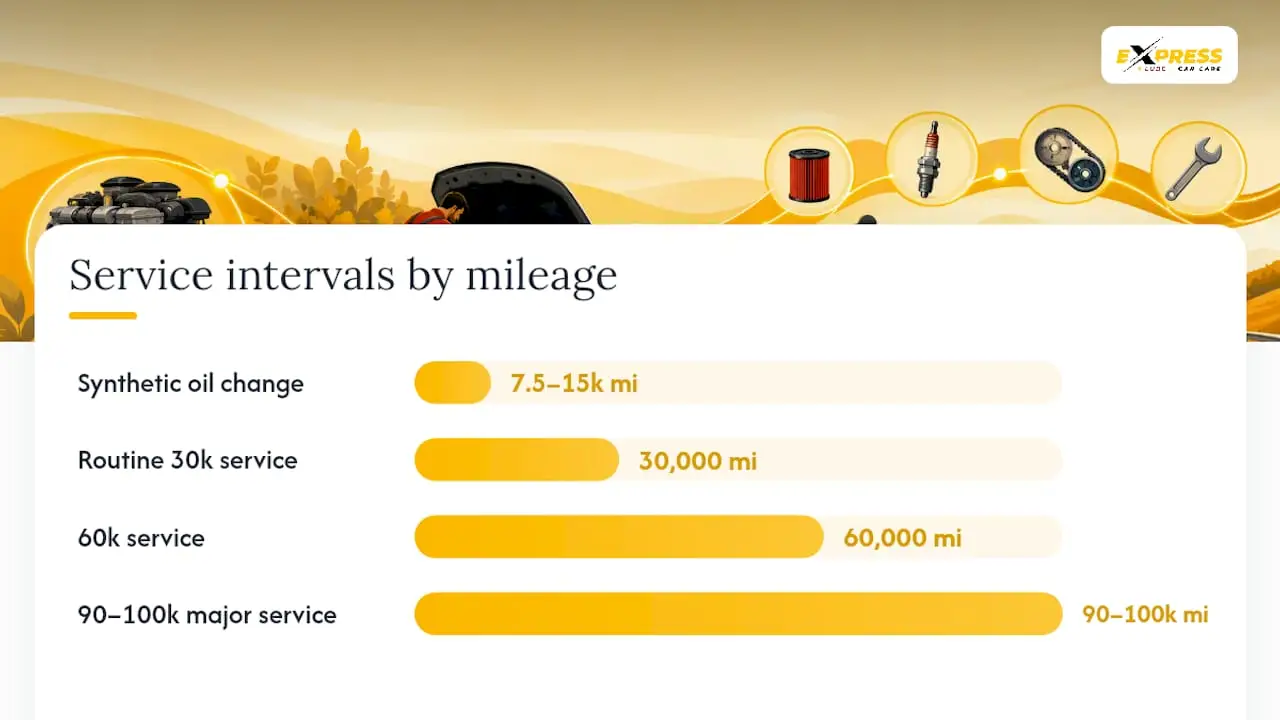
- 30,000 miles: Air filter replacement, fuel system inspection, tire rotation, brake check, and fluid top-offs are common at this interval.
- 60,000 miles: Spark plug replacement (for many vehicles), timing belt inspection or replacement, transmission fluid, and a full multi-point inspection.
- 90,000–100,000 miles: Major service interval for most vehicles. Spark plugs (if not done at 60k), coolant flush, brake fluid flush, and a thorough inspection of belts, hoses, and suspension components.
To decide whether to schedule service now:
- Pull out your owner’s manual and check the maintenance schedule for your current mileage.
- Look at your instrument cluster for a maintenance minder or service light.
- Note any symptoms: rough idle, hard starts, reduced fuel economy, or warning lights.
- If a warning light is on, schedule a diagnostic scan before assuming you need new parts.
- When in doubt, a multi-point inspection costs little and tells you exactly where your vehicle stands.
Synthetic oil has extended oil change intervals well past the old 3,000-mile rule. Many vehicles using full synthetic oil can go 7,500–15,000 miles between changes, but your driving conditions matter. Frequent short trips, towing, or extreme temperatures shorten that window.
Signs your car needs service now, not later
Some symptoms can wait for your next scheduled visit. Others need attention right away. Rocco’s Honda identifies rough idling, reduced fuel economy, unusual noises, starting trouble, the check engine light, and colored exhaust smoke as key warning signs that warrant service.
- Steady check engine light: Schedule a diagnostic scan within a few days. Don’t ignore it, but you don’t need to pull over immediately.
- Flashing check engine light: Stop driving as soon as it’s safe. A flashing light signals an active misfire that can damage your catalytic converter within minutes.
- Rough idle or misfires: Schedule a diagnostic scan. Could be spark plugs, a coil, a vacuum leak, or a fuel delivery issue.
- Hard starts or stalling: Diagnostic scan recommended. Multiple causes are possible; live-data testing narrows it down.
- Loss of power or sluggish acceleration: Schedule a multi-point inspection and diagnostic scan.
- Noticeably worse fuel economy: Often a sign of worn spark plugs, a dirty air filter, or a sensor issue. Schedule an inspection.
- Knocking or pinging from the engine: Schedule service promptly. Detonation causes internal engine damage over time.
- Unusual exhaust smoke: Blue smoke suggests burning oil; white smoke can indicate coolant entering the combustion chamber; black smoke points to a rich fuel mixture.
- Vibration or pulling while driving: Tire, wheel, or suspension issue. Schedule an inspection.
Stop driving immediately if you see smoke rising from under the hood, hear severe knocking that worsens under load, or notice active fluid leaking onto a hot surface. These are situations where continuing to drive risks serious engine damage.
How to choose the right shop for your maintenance visit
Not every shop that advertises a “tune-up” approaches the work the same way. Asking the right questions before you hand over your keys protects you from unnecessary repairs and unclear billing.
Questions to ask before approving work:
- Do you perform an OBD-II diagnostic scan as part of the inspection?
- Are your technicians ASE-certified?
- Will you show me the parts you removed?
- Do you provide a written, line-item estimate before starting?
- What warranty do you offer on parts and labor?
- Do you use a digital vehicle inspection with photos?
Red flags to watch for:
- A shop that quotes a flat “tune-up price” without asking about your vehicle’s mileage, symptoms, or service history.
- Pressure to replace multiple parts before completing a diagnostic scan.
- Refusal to share the diagnostic trouble codes or show you the replaced parts.
- Vague verbal estimates with no written breakdown.
A shop that provides digital vehicle inspections with photos and clear line-item estimates reduces confusion and gives you a record of what was found and what was done. RepairPal certification and third-party recognitions are additional signals that a shop meets independent quality standards.
Pro Tip: Use a local mechanic checklist to evaluate any shop before your first visit. A few minutes of research can save you hundreds of dollars.
Why your owner’s manual beats a generic tune-up package
Manufacturer maintenance schedules exist because engineers designed your vehicle’s components to specific tolerances and wear rates. A generic annual tune-up package doesn’t account for the fact that your iridium spark plugs may have 40,000 miles left on them, or that your transmission fluid was just changed.
Following the manufacturer’s schedule, rather than a one-size-fits-all package, prevents two costly mistakes: replacing parts that don’t need replacing, and missing the ones that do. Advantage Auto points out that a diagnostic code is a clue, not a diagnosis. Replacing parts based solely on a code read, without live-data testing to confirm the root cause, wastes money and can leave the actual problem unresolved.
Scheduled maintenance also protects your vehicle’s resale value and fuel economy. A well-documented service history tells the next owner that the car was cared for methodically, not reactively.
If you’re unsure whether your vehicle is due for service, a preventive maintenance schedule gives you a clear framework to follow. The goal is targeted, evidence-based maintenance, not parts replacement by calendar.
Our perspective on what modern maintenance should look like
The phrase “tune-up” has outlived its original meaning, and that creates a real problem for drivers. When a shop sells a generic tune-up package without first asking about your mileage, symptoms, or service history, you’re paying for a guess. That’s not how we approach maintenance at Express Lube & Car Care.
Every visit starts with a conversation about what you’ve noticed and where your vehicle stands on its manufacturer’s schedule. When warning lights are present, we run an OBD-II scan and use live-data testing to confirm what’s actually happening before recommending any parts replacement. Our digital vehicle inspections include photos of what our technicians found, so you can see the condition of your components rather than just taking someone’s word for it.
One thing our ASE-certified technicians see repeatedly: drivers who skip the diagnostic step and replace spark plugs, coils, or oxygen sensors based on a code read alone, only to return with the same symptom. The code pointed to the symptom. The live data would have pointed to the cause. That’s the difference between a parts swap and an actual repair.
The most practical maintenance habit you can build is simple: keep your owner’s manual in the car, note your mileage at every oil change, and schedule a multi-point inspection at each major mileage milestone. RepairPal certification and ASE credentials aren’t just marketing. They’re a commitment to doing the diagnostic work correctly the first time.
Get your vehicle inspected at Express Lube & Car Care
Skipping the guesswork starts with a clear picture of your vehicle’s actual condition. Express Lube & Car Care offers digital vehicle inspections with photos and technician recommendations, so you see exactly what was found and what needs attention, not just a verbal summary at the counter.
Our services cover everything a modern maintenance visit requires: oil changes, spark plug replacement, multi-point inspections, OBD-II diagnostic scans, battery and tire services, and fluid flushes. No appointment is required for most services, and same-day availability means you don’t have to plan around a long wait. If an unexpected repair comes up, flexible financing options through Snap Finance are available so cost doesn’t delay necessary work.
Schedule your inspection online or stop by our Haltom City location. Our ASE-certified technicians will start with your manufacturer’s maintenance schedule and tell you exactly what your vehicle needs.
Sources
The following sources were used in this article and are worth bookmarking for further reading on maintenance intervals and modern diagnostics:
- Car Tuneup: What They Mean and When You Need One – Kelley Blue Book
- Do Today’s Cars Still Need Tuneups? | HowStuffWorks
- What is a Tune-Up for the Modern Car? – North Texas Automotive Service Tips & News | Wichita Falls, TX Auto Repair & Tire Shop
- Engine Tune Up Signs | 7 Key Warnings for Car Care
Your owner’s manual remains the single most authoritative source for your specific vehicle’s maintenance intervals. When in doubt, it takes priority over any general guide, including this one.
FAQ
What does an engine tune up consist of?
A modern engine tune up typically includes an oil change, spark plug inspection or replacement, air and cabin filter checks, battery test, tire rotation, brake inspection, fluid top-offs, and an OBD-II diagnostic scan when warning lights or symptoms are present. The exact services depend on your vehicle’s mileage and manufacturer schedule.
How much does an engine tune up cost?
A basic maintenance visit runs roughly $60–$120 for an oil change and inspection; a comprehensive service covering spark plugs, multiple filters, fluid flushes, and diagnostic labor can reach $300–$800 or more depending on your vehicle and what it needs.
Is an engine tune up necessary?
Yes, but the term is misleading on modern vehicles. What’s necessary is following your manufacturer’s maintenance schedule, which replaces the old-school tune-up concept with targeted, mileage-based service that keeps your engine running efficiently and prevents larger failures.
What are the signs that your car needs a tune-up?
Key warning signs include a steady or flashing check engine light, rough idle, misfires, hard starts, noticeably worse fuel economy, knocking or pinging from the engine, and unusual exhaust smoke. A flashing check engine light warrants stopping as soon as safely possible; the others call for scheduling a diagnostic scan promptly.
Can I get a diagnostic scan without a full tune-up?
Yes. An OBD-II diagnostic scan is a standalone service most shops offer, and it’s often the right first step when a warning light appears. Express Lube & Car Care performs diagnostic scans as part of its digital vehicle inspection service, giving you a clear picture of your vehicle’s condition before any repair decisions are made.