

An oil change replaces degraded engine oil and the oil filter so your engine stays lubricated, cooled, cleaned, and protected. That single service, which typically runs $35–$100 depending on oil type and your vehicle, is the most cost-effective thing you can do to keep an engine running long-term. Your first step: check your owner’s manual or oil-life monitor for the interval that applies to your car.
Here’s what an oil change restores immediately:
- Lubrication — fresh oil forms a protective film between metal surfaces, reducing friction and heat
- Cooling — oil carries heat away from parts the coolant system can’t reach directly
- Cleaning — new detergent additives suspend contaminants and carry them to the filter
- Additive protection — antiwear agents, antioxidants, and corrosion inhibitors are replenished
- Sealing — oil helps piston rings maintain compression and prevent combustion gases from escaping
Quick fact: Consumer Reports notes that oil degrades from heat and pressure and collects contaminants over time, which is exactly why following the owner’s manual and oil-life monitor matters more than any arbitrary mileage rule.
Key Takeaways
An oil change replaces degraded oil and the filter to restore lubrication, cooling, cleaning, and additive protection — skipping it risks sludge, accelerated wear, and repair costs that dwarf the routine service price.
| Point | Details |
|---|---|
| Core function | Fresh oil restores lubrication, cooling, cleaning, sealing, and corrosion protection in one service. |
| Right interval | Most modern cars: 5,000–7,500 miles; full synthetic often 7,500–10,000 miles; always follow your owner’s manual or OLM. |
| Filter every time | Replace the oil filter at every change — a clogged filter defeats fresh oil within miles. |
| Warning signs | Oil pressure light, knocking at startup, milky dipstick, or dropping oil level all need immediate attention. |
| Express Lube & Car Care | ASE-certified, no-appointment-required oil changes in Haltom City with digital inspection photos and itemized receipts. |
Table of Contents
- What does an oil change do for your engine’s health?
- How does an oil change actually work, step by step?
- Which oil type is right for your car?
- How often should you change your oil?
- Signs your oil needs attention right now
- What happens when you skip oil changes?
- What a quality shop does during your oil change
- Our perspective on following the owner’s manual
- Ready for a quick, reliable oil change in Haltom City?
- Sources
- FAQ
What does an oil change do for your engine’s health?
Motor oil isn’t just a lubricant. According to engine lubrication research from BUET, oil performs five distinct jobs inside a running engine: lubrication, sealing, cooling, cleaning, and corrosion protection. Each one depends on the oil staying chemically intact.
Lubrication is the obvious one. Oil keeps metal parts from grinding against each other at thousands of RPMs. Without it, friction generates heat fast enough to weld surfaces together. Sealing is less obvious: oil fills microscopic gaps around piston rings, helping maintain compression and preventing combustion gases from leaking into the crankcase.
Cooling is where many drivers are surprised. The coolant system handles the block and head, but oil reaches the undersides of pistons, the camshaft, and the bearings — areas coolant never touches. Chevron Lubricants connects regular oil and filter replacement directly to engine longevity and reduced emissions, because clean oil supports combustion efficiency.
Cleaning happens through detergents and dispersants in the additive package. These chemicals suspend dirt, carbon particles, and combustion byproducts so they stay in suspension rather than sticking to engine surfaces. Over time, those additives get consumed. Pennzoil’s technical overview explains that modern synthetic oils combine base stocks with detergents, dispersants, antiwear additives, and viscosity improvers — all working together and all wearing out.
How does an oil change actually work, step by step?
A proper oil change follows a short, methodical sequence. Whether you’re at a shop or doing it yourself, each step has a reason.
- Warm the engine briefly — a few minutes of idle loosens sludge and thins the oil so it drains completely.
- Drain the old oil — the drain plug is removed and all degraded oil flows out; the plug and gasket are inspected for wear.
- Remove the old oil filter — the used filter holds trapped contaminants; leaving it in defeats the purpose of fresh oil. Wikipedia’s motor oil entry confirms that the filter captures particles and sludge, and replacing it at every service preserves the effectiveness of fresh oil.
- Install a new filter — the new filter is pre-filled slightly and the gasket is lightly oiled to seat properly.
- Reinstall the drain plug — torqued to spec, not just hand-tight.
- Add the correct oil — the right grade and quantity per the owner’s manual.
- Check the level and inspect for leaks — run the engine briefly, then verify the dipstick reads full and no oil appears around the drain plug or filter.
A quality shop also checks tire pressure, other fluid levels, belts, hoses, and the air filter during this visit; they often include safe engine-bay cleaning and ceramic protection to keep your engine bay in top condition alongside maintenance. That brief multi-point check catches problems early, before they become expensive.
Pro Tip: Always ask for an itemized receipt that lists the oil grade (e.g., 5W-30 full synthetic) and the number of quarts used. That record matters for warranty claims and adds to resale value.
Which oil type is right for your car?
Three categories cover most vehicles on the road, and the right choice usually comes down to your manufacturer’s spec and your car’s age.
- Conventional oil suits older engines designed before synthetic formulations were common. It’s the most affordable option and works fine when the manufacturer doesn’t require synthetic, though it breaks down faster under heat and stress.
- Synthetic blend mixes conventional base oil with synthetic components. It handles temperature swings better than straight conventional and costs less than full synthetic, making it a practical middle ground for many drivers.
- Full synthetic offers the strongest protection. It resists breakdown at high temperatures, flows better in cold starts, and helps prevent sludge. Pennzoil’s formulation data shows that synthetic additive packages maintain performance across a wider temperature range than conventional oils. Most modern vehicles, turbocharged engines, and high-mileage cars benefit from full synthetic.
For a deeper comparison of these options, the synthetic vs. conventional breakdown at Express Lube & Car Care walks through the trade-offs by vehicle type. And if viscosity numbers still feel confusing, this engine oil viscosity guide explains what 0W-20 versus 5W-30 means in plain terms.
How often should you change your oil?
The old “every 3,000 miles” rule is outdated for most modern vehicles. TorqueBrief’s U.S. driver guide puts the reasonable interval for many modern cars at 5,000–7,500 miles, with full synthetics often reaching 7,500–10,000 miles when the manufacturer allows. Severe-duty driving shortens those intervals.
One factor many drivers overlook: low annual mileage doesn’t mean you can skip changes. Popular Mechanics explains that short trips that never reach full operating temperature let moisture and fuel dilute the oil, which promotes sludge. Experts recommend changing oil at least twice a year for drivers who mostly take short trips, regardless of mileage.
| Driving scenario | Suggested interval |
|---|---|
| Modern car, highway miles, conventional oil | Every 5,000–7,500 miles or per OLM |
| Modern car, full synthetic | Every 7,500–10,000 miles or per OLM |
| Mostly short trips or city driving | Every 5,000 miles or twice per year |
| Severe duty (towing, dusty conditions, extreme temps) | Every 3,000–5,000 miles |
| Low annual mileage (under 5,000 miles/year) | At least once per year; twice preferred |
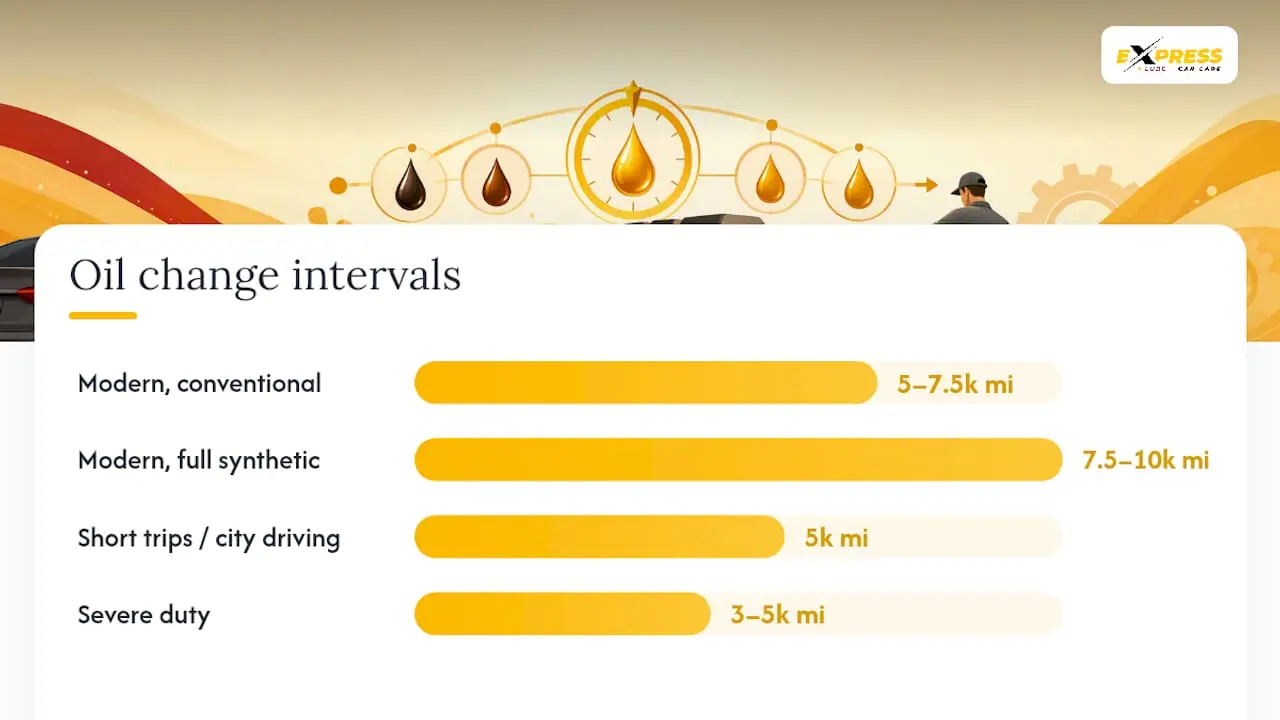
Oil-life monitors (OLMs) calculate oil condition from RPM, temperature, and trip length — they’re more accurate than a fixed mileage rule. Still, the owner’s manual is the final authority. When the OLM and the manual disagree, follow the manual.
Pro Tip: An oil analysis from a lab like Blackstone costs roughly $30 per sample and reports wear metals, fuel dilution, and remaining additive reserves. It’s the most objective way to know whether your current interval is too short, too long, or exactly right.
Signs your oil needs attention right now
Some warning signs are urgent. Others give you a short window to act. Knowing the difference keeps a manageable problem from becoming an expensive one.
- Oil pressure warning light — stop driving as soon as it’s safe. Low oil pressure means metal surfaces may already be running without adequate protection.
- Loud ticking or knocking at startup — often signals low oil level or oil that has lost viscosity. The noise usually fades as pressure builds, but that lag is wear happening in real time.
- Blue or white smoke from the exhaust — blue smoke suggests oil burning in the combustion chamber; white smoke with a sweet smell can indicate coolant mixing with oil, which is a serious problem.
- Milky or frothy oil on the dipstick — a sign of coolant contamination. Don’t drive; get it diagnosed immediately.
- Very dark, gritty oil on the dipstick — oil that looks black and feels gritty has exhausted its additive package and is carrying abrasive particles through your engine.
- Oil level dropping between changes — normal engines consume little to no oil between services. Consistent drops point to a leak or internal burning.
If the oil pressure light comes on while driving, pull over safely and turn off the engine. Topping up the oil is a temporary measure; the underlying cause still needs diagnosis.
What happens when you skip oil changes?
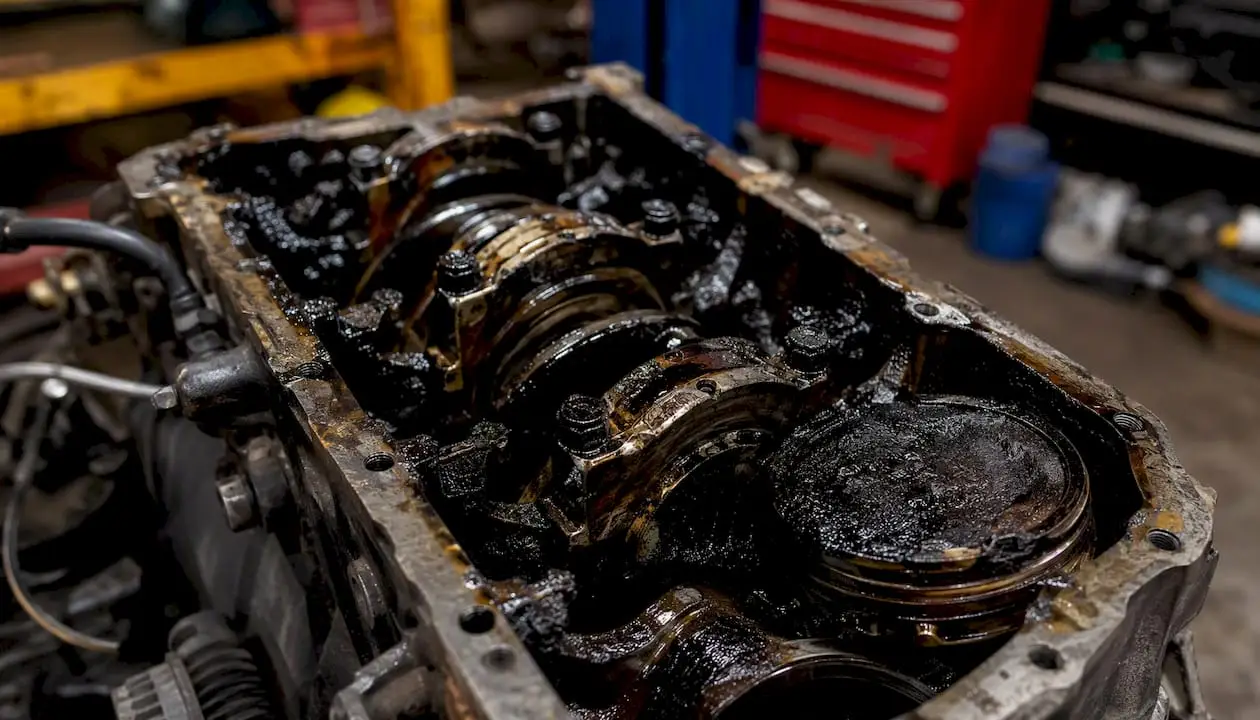
The damage from neglected oil changes is gradual and largely invisible until it’s expensive. Yahoo Autos traces the failure sequence clearly: oil darkens and thickens, sludge builds up, oil passages clog, pressure drops in critical areas, and long-term neglect can end in seized bearings or catastrophic engine failure.
Turbocharged engines are especially vulnerable. Turbo bearings spin at extremely high speeds and depend on clean, pressurized oil. Sludge in the oil feed line to a turbo can destroy the unit quickly, and turbo replacement is expensive, often costing over a thousand dollars before labor.
The stealth nature of this damage is what makes it dangerous. Your engine can be accumulating wear on camshaft lobes and main bearings for months before any symptom appears. By the time you hear a knock, the damage is already done. A routine oil change is the cheapest insurance against that entire chain of failure. For a fuller picture of the repair-cost consequences, the skip-an-oil-change breakdown at Express Lube & Car Care covers real-world scenarios.
What a quality shop does during your oil change
Not every oil change is equal. Here’s what a trustworthy shop should deliver on every visit:
- Verify the correct oil grade and quantity per your owner’s manual or manufacturer spec
- Replace the oil filter with every service, not on alternating visits
- Inspect the drain plug and gasket and replace the gasket if it shows wear
- Check all other fluid levels (coolant, brake, power steering, transmission)
- Inspect belts, hoses, and the air filter visually
- Confirm oil pressure is normal after refill
- Provide an itemized receipt listing oil grade, quantity, and filter brand
Trust signals worth asking about: ASE-certified technicians, RepairPal certification, digital vehicle inspection with photos, and a written warranty on the work. A shop that offers digital vehicle inspection with photos gives you a record of your car’s condition at each visit — useful for tracking wear trends and supporting resale value.
Pro Tip: Keep your itemized receipts and any digital inspection photos in a folder, physical or cloud-based. That paper trail is evidence of proper maintenance for warranty claims and adds credibility when you sell the vehicle.
Our perspective on following the owner’s manual
At Express Lube & Car Care, we see the same pattern regularly: drivers who follow their owner’s manual and oil-life monitor arrive with clean engines and predictable wear. Those who stretch intervals based on guesswork or outdated rules often arrive with sludge, worn bearings, or a turbo that’s already failing. Manufacturer guidance exists because engineers tested that specific engine under real conditions. Our ASE-certified technicians use that guidance as the baseline for every service, and we provide transparent, itemized receipts so you always know exactly what went into your engine and when.
Ready for a quick, reliable oil change in Haltom City?
Skip the wait and the guesswork. Express Lube & Car Care serves drivers in the DFW area with no-appointment-required oil changes performed by ASE-certified technicians. Walk in, and we’ll verify your correct oil grade, replace the filter, and complete a multi-point inspection, all with a transparent itemized receipt before you leave.
Every service includes a digital vehicle inspection with photos so you can see your car’s condition firsthand. If a larger repair comes up, flexible financing options are available so cost doesn’t delay necessary work. Book your visit or check service details at expresslubehaltom.com.
Sources
The following sources informed this article and are worth reading if you want to go deeper on any topic covered here.
- How Often To Change Car Oil — Popular Mechanics
- Things to know about oil changes for your car — Consumer Reports
- What really happens if you never change your oil — Yahoo Autos
- How often to change oil: Simple U.S. driver guide — TorqueBrief
- What is motor oil? — Pennzoil
- Motor oil — Wikipedia
- Engine Cooling & Lubrication — Dr. Md. Zahurul Haq (BUET)
- The importance of changing your engine oil — Chevron Lubricants
FAQ
Will an oil change make your car run better?
Yes, noticeably so in many cases. Fresh oil reduces friction, restores proper oil pressure, and allows the engine to run at lower temperatures, which often translates to smoother idle and slightly better fuel efficiency.
What are the main benefits of a routine oil change?
An oil change restores lubrication, removes contaminants, replenishes additive protection, and replaces a clogged filter, all of which reduce wear and help prevent sludge buildup that can lead to costly engine damage.
Can you go two years without changing your oil?
It’s risky for most drivers. Even low-mileage vehicles accumulate moisture and fuel dilution from short trips, which degrades oil chemistry over time. Popular Mechanics recommends changing oil at least once a year for low-mileage drivers, and twice a year if you mostly take short trips.
What should you avoid doing right after an oil change?
Avoid hard acceleration or high-RPM driving for the first few minutes. Give the fresh oil a short period to circulate fully and build pressure throughout the engine before putting it under heavy load.
Does the oil filter need to be replaced every time?
Yes. The filter traps contaminants from the old oil, and those particles stay in the filter housing. Reusing a saturated filter with fresh oil means contaminants can bypass the filter media and circulate through a clean system, defeating the purpose of the change.