
Car repair upselling is defined as the practice of recommending services or parts beyond what a vehicle actually needs, often using pressure, fear, or vague estimates to secure approval. Knowing how to avoid car repair upsell tactics protects your wallet and your trust in the shop you choose. The Federal Trade Commission recognizes deceptive auto repair practices as a consumer protection issue, and 2026 industry guidance from sources like RepairPal certification standards reinforces that transparency in car service is the baseline expectation, not a bonus. You have every right to ask questions, request written proof, and walk away if something feels wrong.
What are common upsell tactics used by car repair shops?
Recognizing car repair upselling starts with knowing what it looks like in practice. Shops that rely on upsells tend to follow predictable patterns, and spotting them early gives you control before you sign anything.
The most common red flags include:
- Vague or lump-sum estimates. Dishonest shops may inflate parts prices 30% to 100% and bury the markup inside a single line item. When a quote says “engine work: $900” with no breakdown, you cannot verify what you are paying for.
- Artificial urgency. Phrases like “your car won’t make it home without this” are designed to cloud your judgment. Pressure to approve repairs immediately is a psychological tactic. Most non-emergency repairs can safely wait a few days while you get a second opinion.
- Premature fluid services. Modern synthetic transmission fluid lasts 30,000 to 60,000 miles, yet many shops recommend flushes well before that interval. Coolant flushes and fuel system cleanings follow the same pattern when no symptoms exist.
- Fear-based language. Statements like “this could cause your brakes to fail completely” without photographic or video evidence are a warning sign. Legitimate shops show you the problem, not just describe it.
- Refusal to show replaced parts. Shops that refuse to return old parts or provide detailed quotes are signaling that transparency is not their priority.
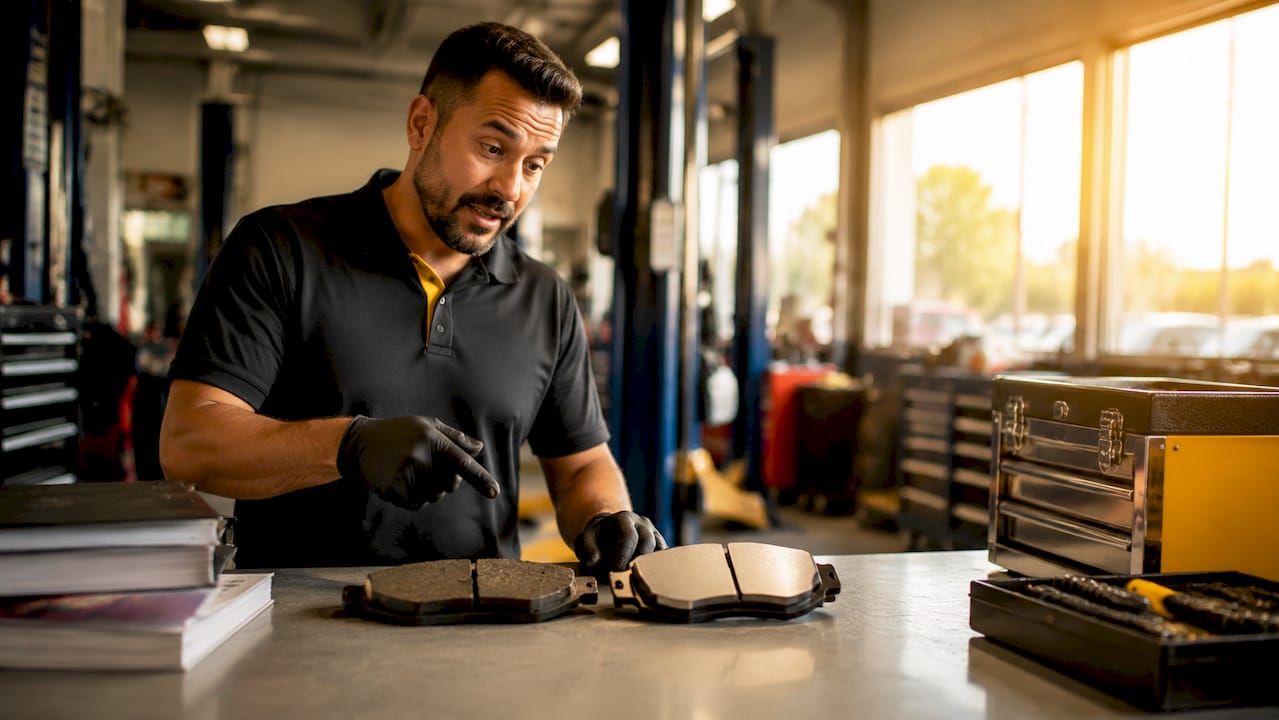
Pro Tip: Ask the service advisor to show you the worn or damaged part before approving any replacement. A trustworthy shop will do this without hesitation.
The pattern across all these tactics is the same: reduce your ability to compare, verify, or delay. Once you recognize that pattern, the tactics lose most of their power.
How do you verify repair estimates and prioritize necessary services?
Getting a written, itemized estimate is the single most effective tool for avoiding unnecessary repairs. An estimate that lists parts, labor hours, fees, and taxes separately gives you something concrete to question and compare.
Use this five-step process when reviewing any repair quote:
- Request full itemization. Every line should show the part name, part cost, labor hours, and labor rate. If a shop refuses, that refusal is itself a red flag. You can learn more about what a proper breakdown looks like in this guide to verifying auto repair estimates.
- Apply the essential check. Ask the technician which items are absolutely necessary for the next three months of safe driving. This separates urgent safety repairs from cosmetic or premature services.
- Request proof. Ask for photos, video, or the specific diagnostic trouble code for any recommended repair. This is standard practice at reputable shops and costs them nothing to provide.
- Check labor billing structure. Many shops charge by “book time” rather than actual hours worked. If two repairs share common disassembly, ask the shop to bundle the labor and reflect the actual efficiency in the bill.
- Get a second opinion. For any repair over $300, a second estimate from a different shop is worth the time. Price differences of 40% or more on the same job are not uncommon.
Understanding how service department estimates work at reputable shops gives you a useful baseline for comparison when reviewing quotes elsewhere.
Pro Tip: Cross-reference any recommended service against your owner’s manual before approving it. If the manual does not list it at your current mileage, ask the shop to justify the recommendation in writing.
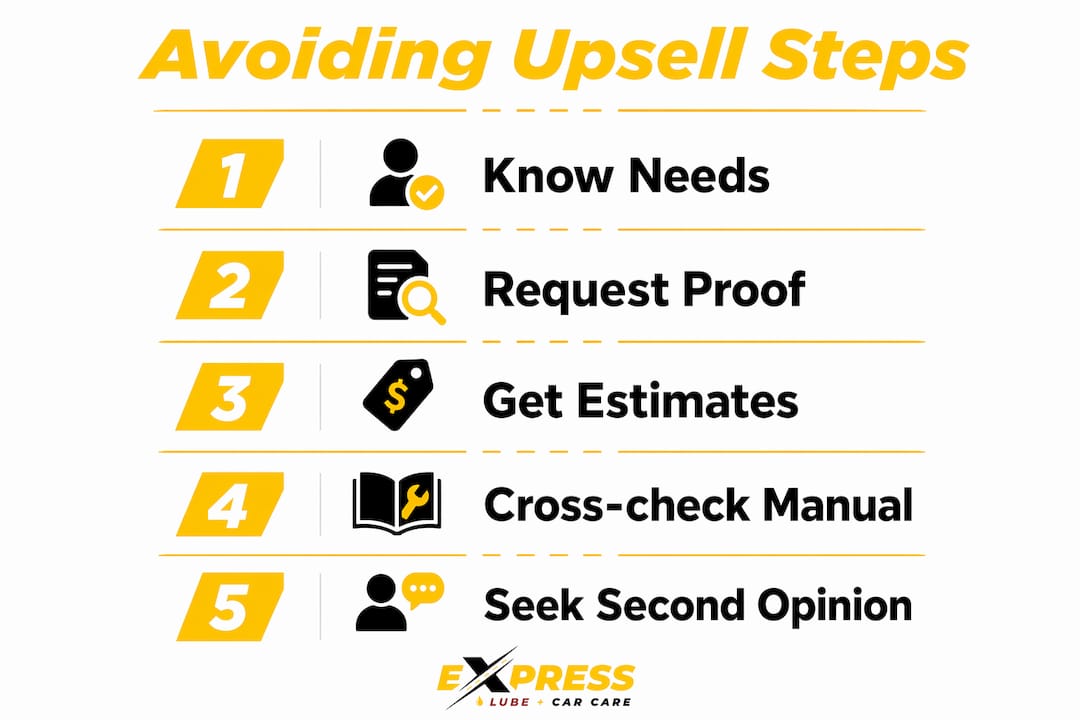
Your owner’s manual is a free, manufacturer-backed resource that tells you exactly what your vehicle needs and when. Shops that recommend services ahead of those intervals need to explain why your specific vehicle warrants an exception.
Practical steps to avoid upsells before and during your repair appointment
Preparation before you hand over your keys is your strongest defense against car maintenance scams. Most upsell tactics succeed because drivers arrive without a plan.
- Read your owner’s manual first. Check the recommended maintenance intervals for your make and model before any appointment. Knowing what is actually due removes the shop’s ability to invent urgency.
- Set a diagnostic budget limit. Authorize a specific dollar amount for diagnostic work before the vehicle is examined. Treat diagnostic approval as entirely separate from repair approval. This prevents open-ended investigative labor from ballooning into a surprise bill.
- Write instructions on the repair order. Before you leave the vehicle, add this sentence to the repair order in writing:
“Do not perform any additional work or exceed the estimate without my written or recorded approval.” This creates a clear legal barrier to unauthorized charges and removes any ambiguity about what you agreed to.
- Ask direct questions during the consultation. “What happens if I wait 30 days on this?” and “Can you show me the damage?” are two questions that quickly reveal whether a recommendation is genuine. Shops that push back on these questions are worth leaving.
- Ask about diagnostic fee waivers. Repeat customers can often request diagnostic fee waivers when the recommended repair is performed at that same shop. These credits are sometimes worth $100 or more and are rarely offered unless you ask.
- Consider remanufactured parts. For non-critical components, remanufactured parts meet OEM specifications and cost significantly less than new. Ask whether they are available before approving any parts purchase.
Pro Tip: Never approve repairs verbally under pressure. Verbal approval without written confirmation can be difficult to dispute later. Always confirm changes to the repair order in writing or via a recorded phone message.
The goal of all these steps is simple: slow the process down enough to make an informed decision. Shops that rely on upsells depend on speed and pressure. Removing both changes the dynamic entirely.
What should you do if you suspect upselling is happening?
Suspecting upselling mid-appointment is stressful, but you have clear options. Acting calmly and methodically protects you better than reacting with frustration.
- Ask for documentation immediately. Request the diagnostic code, photos of the damage, and a written explanation of why the repair is necessary. A legitimate shop provides this without delay.
- Pause and do not approve anything on the spot. Tell the service advisor you need time to review the estimate. Artificial urgency clouds judgment and leads to unnecessary spending. You are allowed to say, “I will call you back by end of day.”
- Request your vehicle back if repairs have not started. You have the right to retrieve your vehicle after a diagnostic without authorizing any repair. Pay the diagnostic fee if applicable and leave.
- Compare the quote to independent pricing data. Resources like RepairPal’s cost estimator provide labor and parts benchmarks by zip code. A quote that runs significantly higher than the regional average warrants a direct conversation with the shop manager.
- Escalate if necessary. If you believe you were charged for work not performed, file a complaint with your state’s Bureau of Automotive Repair or the Better Business Bureau. Keep all written estimates, receipts, and any photos as documentation.
Pro Tip: If a shop refuses to allow a second opinion or threatens to charge storage fees to pressure a quick decision, treat that as a definitive signal to find a different shop. Trustworthy shops welcome informed customers.
Knowing the qualities of a reliable auto shop before you need repairs makes it far easier to recognize when a shop falls short of those standards.
Key takeaways
Avoiding car repair upsells requires written estimates, direct questions, and the willingness to pause before approving any work beyond what you came in for.
| Point | Details |
|---|---|
| Demand itemized estimates | Every part, labor hour, and fee must appear as a separate line before you sign. |
| Apply the essential check | Ask which repairs are critical for the next three months to separate urgent from optional work. |
| Set a diagnostic budget | Authorize a fixed diagnostic amount separately from any repair approval to control costs. |
| Write it on the repair order | Add written instructions requiring your approval before any additional work is performed. |
| Walk away when pressured | Artificial urgency is a tactic. Most repairs can wait a few days for a second opinion. |
What working with car owners taught us about repair pressure
At Express Lube & Car Care, we see drivers arrive after bad experiences at other shops, and the story is almost always the same. They approved something quickly because they felt they had no choice. The repair turned out to be either premature or unnecessary, and they had no paperwork to challenge it.
The honest truth is that patience is the most underrated tool a car owner has. A service advisor who cannot answer “what happens if I wait two weeks on this?” with a clear, specific answer is not giving you a recommendation grounded in your vehicle’s actual condition. That vagueness is the tell.
We have watched customers save hundreds of dollars simply by asking for a written breakdown and comparing it to their owner’s manual before approving anything. The knowledge required is not technical. It is organizational. You need a copy of your maintenance schedule, a willingness to ask one or two direct questions, and the confidence to say “I need to think about this.”
The shops that push back hardest on those requests are the ones you should leave. The shops that welcome them are the ones worth returning to.
Informed car owners are not difficult customers. They are the customers every honest shop wants.
— Express Lube & Car Care
Transparent car repair at Express Lube & Car Care
Express Lube & Car Care provides ASE-certified technicians and RepairPal certification to every customer who walks through the door, with no appointment required.
Every repair starts with a clear, itemized estimate covering parts, labor, and fees before any work begins. Diagnostic approvals are handled separately from repair approvals, so you stay in control of costs at every step. If you are dealing with a check engine light or an unexplained symptom, the engine diagnostics service at Express Lube & Car Care gives you a straight answer without pressure. Drivers across the DFW area trust Express Lube & Car Care because the pricing is upfront and the recommendations are backed by evidence, not urgency.
FAQ
What is car repair upselling?
Car repair upselling is the practice of recommending services or parts beyond what a vehicle actually needs, often using pressure or vague estimates to secure approval. It differs from legitimate recommendations, which are backed by evidence and tied to manufacturer maintenance intervals.
How do I know if a repair is actually necessary?
Ask the technician which items are critical for the next three months of safe driving, and request photos or diagnostic codes as proof. Cross-reference any recommendation against your owner’s manual before approving it.
Can I legally refuse additional repairs at a shop?
Yes. You have the right to retrieve your vehicle after a diagnostic without authorizing any repair. Writing “no additional work without written approval” on the repair order reinforces that right before the shop begins any work.
What should I do if I was charged for unauthorized repairs?
Keep all written estimates and receipts, then file a complaint with your state’s Bureau of Automotive Repair or the Better Business Bureau. Documented evidence of what you approved versus what was charged is the foundation of any dispute.
How much can I save by getting a second opinion?
Price differences of 40% or more on identical repairs between shops are not uncommon. For any repair over $300, a second estimate is worth the time and can reveal whether the original quote reflects fair market pricing.