

Expect a U.S. head gasket repair or replacement to run in the mid to high thousands of dollars for most passenger cars, with labor usually covering the bigger half of that bill. RepairPal’s estimator puts the national average between $2,543 and $3,337, with labor alone running $1,633 to $2,397. Complexity, machine work, or collateral engine damage can push that number to $4,000 or beyond.
If your car is overheating right now or you’re seeing white smoke from the tailpipe:
- Stop driving and get it towed rather than risking further damage.
- Ask your shop for a block test before you agree to any repair estimate.
Quick answer: the average head gasket job lands around $2,900, according to RepairPal’s data, but your final number depends heavily on engine layout and what the technician finds once the head comes off.
Key Takeaways
Head gasket repair cost in the U.S. typically runs $2,500 to $3,300 for mainstream vehicles, with labor accounting for most of that total and complexity or delay driving the price much higher.
| Point | Details |
|---|---|
| National average | Expect $2,543 to $3,337 total, with labor making up $1,633 to $2,397 of that figure. |
| Labor dominates the bill | Head removal, inspection, and possible machining take 8 to 12+ hours on most engines. |
| Act fast on overheating | White smoke or a spiking temperature gauge means stop driving and get a tow to avoid a $4,000 to $6,000 engine rebuild. |
| Sealants are temporary | Additive-based leak sealers can buy short-term time but don’t correct the underlying damage. |
| Get it inspected properly | Express Lube & Car Care’s ASE-certified techs use digital vehicle inspections and block testing to deliver a written estimate you can trust. |
Table of Contents
- How Much Does a Head Gasket Repair Cost?
- What Factors Increase the Cost of Head Gasket Repair?
- What Are the Signs of a Blown Head Gasket?
- Is DIY Head Gasket Repair Worth the Risk?
- How Do You Get an Accurate Head Gasket Repair Estimate?
- How Can You Prevent Head Gasket Failure?
- Where Do These Cost Estimates Come From?
- What Our Shop Sees on Head Gasket Quotes
- Get a Written Head Gasket Estimate You Can Trust
- Sources
- FAQ
How Much Does a Head Gasket Repair Cost?
The head gasket itself is a modest part, often under $100. What you’re really paying for is labor, and that’s where head gasket repair cost estimates swing widely between shops and vehicles.
Removing a cylinder head is a multi-hour job. Technicians have to drain fluids, disconnect the intake and exhaust, pull the timing components, lift the head, inspect it for warping, and reinstall everything with new gaskets and often new bolts. Book time on many mainstream engines runs 8 to 12 hours or more, and that’s before you factor in machine shop work if the head needs resurfacing.
| Vehicle Type | Typical Cost Range | Labor Share |
|---|---|---|
| Economy car (4-cylinder) | $2,500 to $3,300 | High |
| Mid-range sedan/crossover | $2,500 to $3,300 | High |
| Truck/SUV (V6 or V8) | $4,000 or beyond | Very high |
| Luxury or performance vehicle | $4,000–$6,000+ | Very high |
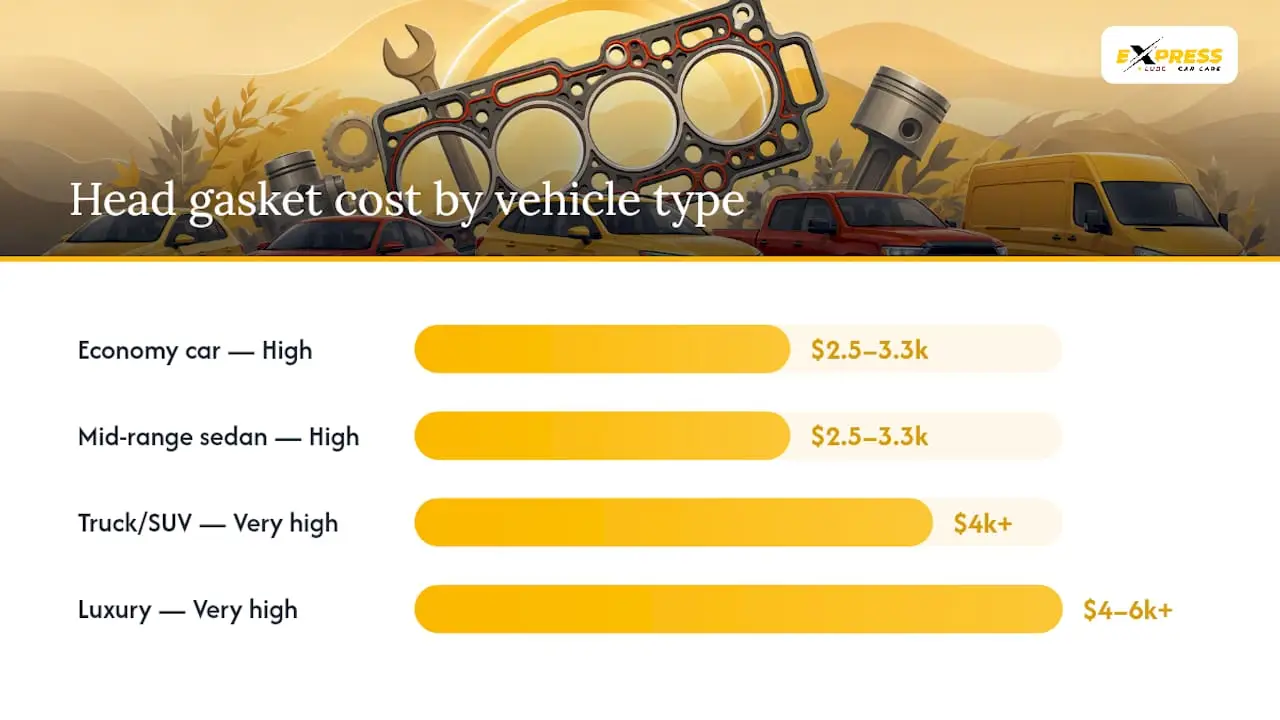
AutOwner’s tiered estimates show labor commonly makes up 72 to 77% of the total cost across these categories, which lines up with what shops actually see on paid invoices. Industry invoice surveys place typical modern repairs in the mid-$2,000s, with jobs climbing to $4,000 to $6,000 when a warped head or extensive damage enters the picture.
Here’s what usually pushes a quote into that higher range:
- Head machining or resurfacing when the surface is warped from overheating.
- Timing belt or chain replacement done at the same time (often required for access anyway).
- New head bolts, which many manufacturers require instead of reusing the old ones.
Pro Tip: Ask your shop to separate the estimate into “must-do” repairs and “while-you’re-in-there” upgrades. That split, favored in shop-invoice practices, is often the fastest way to control your out-the-door number without cutting corners on safety.
What Factors Increase the Cost of Head Gasket Repair?
Every engine is different, and that’s exactly why one neighbor’s $2,200 repair becomes your $4,800 repair. A few things determine which side of the range you land on.
- Engine layout. A V6 or V8 with two cylinder heads usually means double the gasket work and labor compared to a simple inline-four.
- Overhead cam design. Engines with timing chains or belts that interfere with head removal add hours to the job.
- Local labor rates. Shop rates vary by region, and that alone can shift a quote by several hundred dollars.
- Machine shop needs. A warped or cracked head requires resurfacing or replacement, adding real cost.
- Broken fasteners. Corroded head bolts that snap during removal add time and sometimes require specialty extraction.
- Collateral damage. Contaminated bearings or a compromised block from prolonged overheating can turn a gasket job into an engine rebuild.
Vehicle age plays a role too. Parts for older or less common models can take longer to source, which stretches your timeline even if the labor itself isn’t complicated. If your engine has a known coolant leak history, mention it to your technician. It often points to exactly where the head gasket is failing.
What Are the Signs of a Blown Head Gasket?
A failing head gasket rarely stays quiet for long, and knowing which symptom means “pull over now” versus “schedule a visit this week” can save you thousands.
- White exhaust smoke. Coolant burning in the combustion chamber produces thick white smoke, often with a sweet smell. This is an immediate stop-driving signal.
- Overheating with no visible leak. If your temperature gauge climbs and you can’t find where the coolant is going, the gasket may be letting it into the cylinders.
- Milky oil. A creamy film on the dipstick suggests coolant mixing with oil, though it’s not the only possible cause.
- Noticeable power loss. A blown gasket between cylinders can drop compression and make the engine feel sluggish.
Milky oil looks alarming, but it isn’t always a blown head gasket. Fel-Pro’s diagnostic guidance notes that a bad PCV valve or condensation from short trips can produce the same look, which is exactly why shops run a chemical block test or leakdown test before committing you to a costly repair.
Delay matters here. A repair that costs $2,500 today can turn into a $5,000 or $6,000 engine replacement if you keep driving on an overheating engine and warp the block or spin a bearing.
Is DIY Head Gasket Repair Worth the Risk?
We understand the appeal of saving on labor, but this isn’t a weekend brake job. Pulling a cylinder head means torque sequences, surface flatness checks, and often a machine shop visit, work that’s genuinely difficult to get right in a driveway.
- Parts cost for DIY: Often $150 to $400 for the gasket set and bolts.
- Tools required: Torque wrench, engine hoist or support, specialty sockets, and a way to check head flatness.
- Biggest risk: Missing a warped surface or cross-threading a bolt, which turns a repair into a bigger repair.
Some drivers try a bottle of sealant first. That can buy you a little time on a minor seep, but it’s not a fix.
Additive-based leak sealers are generally a temporary measure. Fel-Pro’s own guidance is direct about this: a permanent repair requires replacing the gasket and correcting whatever caused it to fail in the first place.
If you’re seeing white smoke or a rising temperature gauge, don’t drive on it hoping a sealant holds. That’s how a $2,500 job becomes a rebuilt engine.
How Do You Get an Accurate Head Gasket Repair Estimate?
A trustworthy estimate starts with real diagnostics, not a guess based on symptoms alone. Expect the shop to run:
- A cooling system pressure test to check for leaks.
- A chemical block test to detect combustion gases in the coolant.
- A compression or leakdown test to confirm which cylinder is affected.
When you get the written quote, ask:
- How many labor hours are budgeted, and at what rate?
- Is machine shop work included, or billed separately if needed?
- What’s the warranty on parts and labor?
- Are financing options available if the total is higher than expected?
Turnaround typically runs two to four days depending on parts availability and whether machine work is needed.
How Can You Prevent Head Gasket Failure?
Most head gasket failures trace back to overheating, and most overheating traces back to neglected cooling system maintenance. A few habits go a long way toward avoiding this repair entirely.
- Follow your manufacturer’s coolant service interval and use the correct coolant type.
- Replace aging radiator hoses before they fail, not after.
- Address small coolant leaks immediately rather than topping off and hoping.
- Have your radiator inspected if you notice slow overheating on hot days.
Pro Tip: Maintaining proper cooling system pressure and sticking to scheduled coolant changes prevents the corrosion and hotspots that quietly weaken a head gasket over years of driving.
Where Do These Cost Estimates Come From?
These figures come from RepairPal’s estimator, industry shop-invoice surveys, and labor-hour data from CarParts.com, cross-checked against real local labor rates.
Estimator databases converge on mid-$2,000s as the common outcome for mainstream cars, which is a useful sanity check when you’re comparing a local quote against national data.
Express Lube & Car Care’s technicians are ASE-certified, and the shop carries RepairPal certification, so these ranges reflect the same standards used in our own engine diagnostics.
What Our Shop Sees on Head Gasket Quotes
We see it constantly: customers surprised by a quote that jumped once the head came off and revealed warping. Insist on a written estimate that separates diagnostics from repair, and get everything in writing before work starts. If your car is older with high mileage and other issues stacking up, sometimes selling or replacing the engine makes more sense than repairing, and that’s a fair conversation to have with your shop before committing.
Get a Written Head Gasket Estimate You Can Trust
Compared to guessing at a price over the phone or gambling on a bottle of sealant, a documented, in-person diagnosis is the difference between a fair quote and an expensive surprise. Express Lube & Car Care runs a full digital vehicle inspection with photos and technician notes before quoting any head gasket work, so you see exactly what’s failing, not just a number on a page.

Our ASE-certified technicians handle everything from the block test through final reassembly, backed by a shop that carries RepairPal certification. If your total comes in higher than planned, we offer financing through options like Snap Finance so a big repair doesn’t have to wait. And if you’re still deciding whether a repair makes sense at all, our partners at Southside Cash for Junk Cars walk through what to consider if selling ends up being the more practical route.
Ready for a real number instead of a guess? Book an appointment and get a written head gasket estimate backed by an actual inspection, not a phone-call guess.
Sources
FAQ
Is It Worth Fixing a Blown Head Gasket?
For most vehicles with no major secondary damage, yes. It’s usually cheaper than replacing the engine, but if the car has other high-cost issues stacking up, get a full inspection before deciding.
How Much Should a Head Gasket Job Cost?
Most drivers should expect $2,500 to $3,300 for a typical passenger car, based on RepairPal’s national averages, with trucks and luxury vehicles often running $4,000 or more.
Does a Blown Head Gasket Mean Your Car Is Totaled?
No, a blown head gasket by itself doesn’t total a car. It only becomes a totaling situation if repair costs, driven up by collateral damage like a warped block, exceed the vehicle’s actual value.
What’s the Cheapest Way to Fix a Blown Head Gasket?
There isn’t a truly cheap fix. Additive sealers offer a short-term patch at low cost, but Fel-Pro’s own guidance confirms they don’t replace a proper repair, and delaying that repair usually raises your final bill.