
Your engine contains hundreds of metal parts moving against each other thousands of times per minute. Without a functioning lubrication system, those surfaces would grind together, generate catastrophic heat, and seize within minutes. The engine lubrication system solves this by continuously circulating pressurized oil through a network of passages, creating a thin protective film between every critical moving surface.
Here is what the system does at a glance:
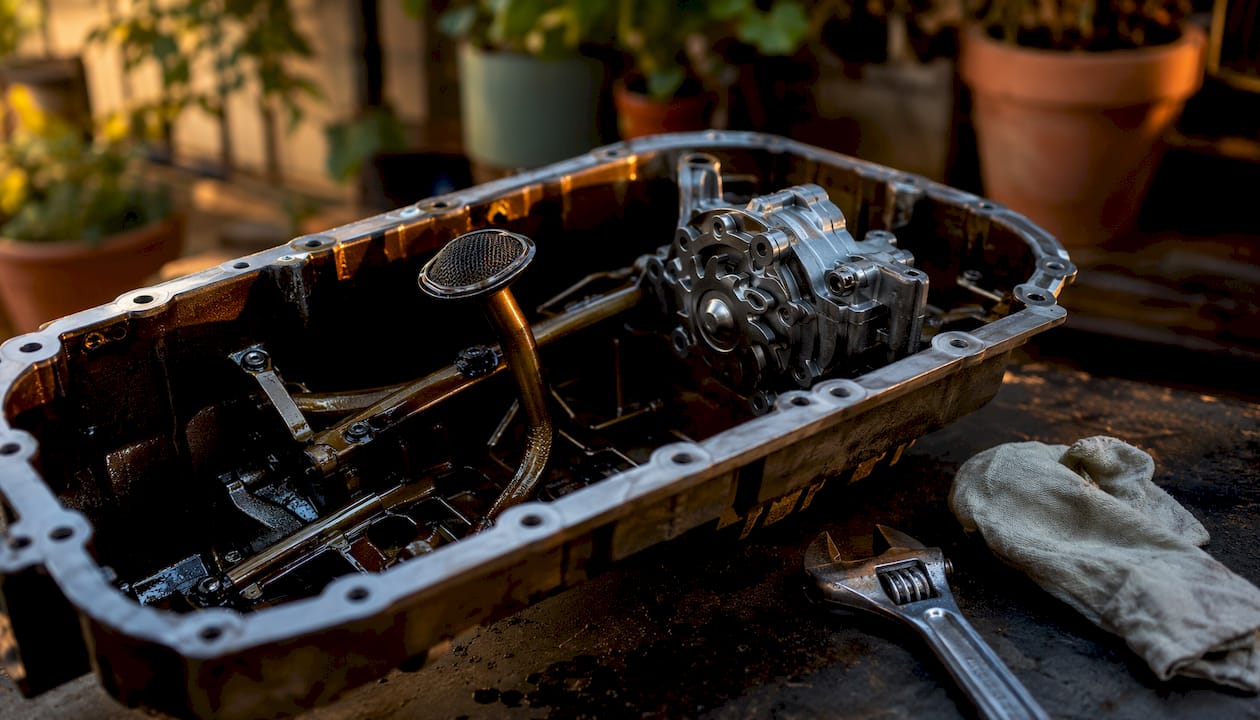
- Oil sump (pan): Stores oil when the engine is off; helps dissipate heat as hot oil returns
- Oil pump: Pressurizes oil to drive circulation throughout the engine
- Oil filter: Removes contaminants before oil reaches sensitive bearings and galleries
- Oil galleries: Drilled and cast passages that distribute oil to every lubrication point
- Pressure relief valve: Prevents over-pressurization by diverting excess oil back to the sump
Beyond friction reduction, engine oil manages heat dissipation, contamination control, piston ring sealing, and hydraulic power for systems like variable valve timing (VVT). Neglect any one of these functions and you are asking the engine to work without the protection it depends on.
What are the main types of engine lubrication systems?
Six primary system types exist, each designed for different engine configurations and performance demands.
- Petroil (mist/charge) system: Oil is pre-mixed with fuel at roughly 2–3% concentration. Used in two-stroke engines like scooters and small motorcycles. No separate oil pump required, but most oil burns with the fuel and exits through the exhaust.
- Splash system: A dipper on the connecting rod strikes oil in a trough with every crankshaft revolution, splashing lubricant onto cylinder walls, bearings, and piston pins. Common in small, low-speed engines.
- Pressure system: An oil pump forces lubricant through drilled passages to all bearings at 2–4 kg/cm² (approximately 28–57 PSI). Provides consistent, controlled delivery and suits high-speed, high-load engines.
- Semi-pressure system: Combines splash and pressure delivery. Main and camshaft bearings receive pressurized oil; other components rely on splash. Most four-stroke engines use some variation of this approach.
- Wet sump system: Oil is stored in the crankcase sump beneath the engine. Operating pressure runs around 4–5 kg/cm². The dominant design in passenger vehicles because it is simple, inexpensive, and requires few components.
- Dry sump system: Oil is stored in a separate external tank. A scavenging pump removes oil from the engine base and returns it to the tank, keeping the crankcase dry. Used in performance and racing applications where a lower engine center of gravity and consistent oil supply under hard cornering matter.
Wet sump systems dominate everyday vehicles for good reason: fewer parts, lower cost, and proven reliability across millions of miles.
How do the key components of the lubrication system work together?
Each component has a specific job, and the system only works when all of them perform correctly.
- Oil sump: Acts as the reservoir and a passive cooling surface. Hot oil returning from the engine releases heat to the surrounding air before recirculating.
- Oil pump (gear or rotor type): Draws oil through a pickup tube and strainer, then pressurizes it. Oil pump suction pulls oil through the strainer first, which catches large particles before they can damage the pump itself.
- Full-flow oil filter: Filters all oil before it enters the main gallery. A filter’s effectiveness depends on media material, pore size, surface area, and differential pressure across the media.
- Bypass filter: A secondary filter that catches contaminants the primary filter misses, adding an extra layer of protection.
- Filter bypass valve: Opens when differential pressure hits 8–15 PSI, allowing unfiltered oil to flow rather than starving the engine. Unfiltered oil reaching bearings is damaging, but oil starvation is worse.
- Oil galleries: A priority-based network of drilled and cast passages. Main bearings receive oil first, then connecting rod bearings, then camshaft bearings, then valve train components.
- Pressure relief valve: Spring-loaded valves calibrated to open at 75–90 PSI prevent over-pressurization during cold starts or high engine speeds.
Pro Tip: If your oil filter clogs and the bypass valve opens regularly, unfiltered oil is reaching your bearings every time. Staying on schedule with filter changes is the simplest way to prevent this.
How does oil actually flow through your engine?
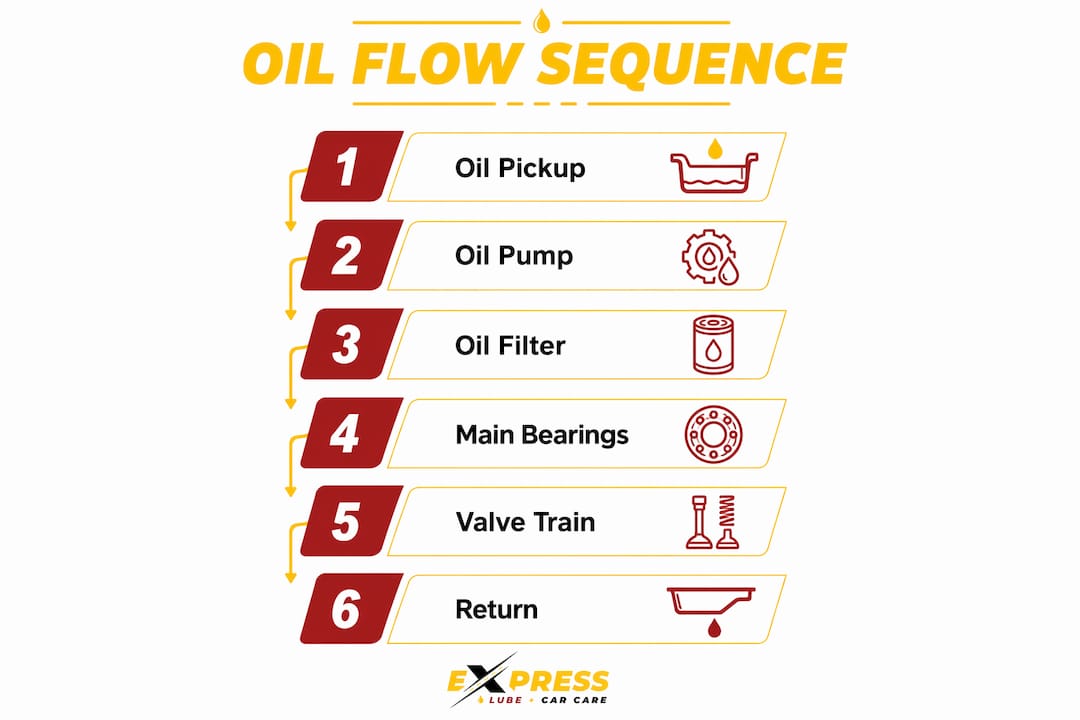
The engine lubrication process follows a precise, engineered sequence designed to protect the most critical components first.
- Step 1: The oil pump draws oil from the sump through the pickup tube and strainer, removing large debris before pressurization.
- Step 2: Pressurized oil flows through the full-flow filter, where contaminants are captured before oil enters the main gallery.
- Step 3: The main oil gallery distributes oil to the main crankshaft bearings, the highest-priority lubrication point.
- Step 4: Cross-drilled passages in the crankshaft carry oil from main journals to connecting rod (big-end) bearings.
- Step 5: Cylinder walls receive oil mainly by splash or fling from the rotating crankshaft. Scraper rings on the pistons remove excess oil to maintain the correct film thickness and preserve the combustion seal.
- Step 6: Cylinder head galleries feed camshaft bearings, hydraulic lifters, and rocker arms. Lifters require a minimum oil pressure to operate correctly.
- Step 7: Oil drains back to the sump by gravity through return passages, completing the circuit.
Oil galleries distribute oil on a priority hierarchy, feeding main bearings first and valve train components last. Complete circulation at operating speed takes a few seconds, with flow rates typical for passenger vehicles.

Common lubrication problems and how to prevent them
Most lubrication failures are predictable and preventable. Knowing the warning signs gives you time to act before serious damage occurs.
- Low oil pressure: Often caused by pump wear, clogged suction screens, or excessive bearing clearance. Symptoms include a slow-rising pressure gauge at startup and engine noise.
- Oil contamination and sludge: Accumulated carbon, water, and combustion acids form black, gooey sludge on internal surfaces. Cold-weather short trips accelerate sludge formation because oil temperatures never get high enough to evaporate moisture.
- Filter clogging: Sludge dislodged at high speeds can clog the oil filter, forcing the bypass valve open and sending dirty oil directly to engine bearings.
- Excessive oil consumption: Worn piston rings or valve seals allow oil to enter the combustion chamber and burn off. Blue exhaust smoke is the clearest sign.
- VVT system disruption: Sludge inside a cam phaser interferes with the precise oil pressure modulation that controls valve timing advance and retard, often storing a diagnostic trouble code that looks like an electronic sensor failure.
Lubrication problems predominantly stem from chemical degradation of oil rather than purely mechanical failures. The oil breaks down thermally, gets diluted by fuel, or absorbs water, and the damage accumulates silently long before any warning light appears.
Pro Tip: After an oil change on a neglected engine, fresh oil’s detergents can loosen accumulated sludge faster than the filter can capture it, clogging the pump screen almost immediately. If you suspect heavy sludge buildup, have a professional assess the engine before the change, not after.
How to choose the right engine oil for your lubrication system
Oil selection directly determines how well your lubrication system performs between changes.
Viscosity grade is the starting point. The SAE viscosity rating (such as 5W-30 or 10W-40) tells you how the oil flows at cold temperatures (the “W” number) and at operating temperature (the second number). Cold oil can be 50–100 times thicker than hot oil, so the cold-start viscosity matters enormously for how quickly oil reaches bearings after ignition.
Oil type matters too. Mineral-based oils suit older engines and require more frequent changes. Full synthetic oils handle temperature extremes better, resist thermal breakdown longer, and are the standard recommendation for most modern engines. Synthetic blends offer a middle ground for drivers transitioning from conventional oil.
Manufacturer specifications override everything else. Your owner’s manual lists the approved viscosity grade and any required certifications, such as API SN Plus or ILSAC GF-6. Using an oil that does not meet these specs can cause VVT malfunctions and accelerated wear, since incorrect oil viscosity directly affects hydraulic pressure for lifters and cam phasers.
How oil pressure regulation and monitoring protect your engine
The pressure relief valve is the system’s safety valve. Spring-loaded and calibrated to open at 75–90 PSI, it diverts excess oil back to the sump when pressure climbs too high, which commonly happens during cold starts when thick oil creates high resistance. Pressure relief valves regulate system pressure to protect components, and gauge fluctuations during warmup are normal unless low pressure persists at operating temperature.
The oil pressure sensor monitors system pressure continuously and signals the engine control unit if pressure drops below a safe threshold. A persistent low-pressure warning at normal operating temperature is a serious warning that demands immediate attention, not a reset.
Monitoring oil level manually every few weeks remains the most reliable early-warning method. A clean dipstick reading in the normal range, combined with a stable pressure gauge, tells you the system is healthy.
Why lubrication is critical for cooling and friction reduction
Engine oil removes roughly 20–30% of total engine heat through circulation, making it a genuine cooling system partner alongside the coolant. Oil reaches surfaces the coolant circuit never touches, including piston undersides, bearing journals, and valve stems.
The friction reduction mechanism works through hydrodynamic film formation. Pressurized oil creates a thin film (5–50 microns) between moving surfaces, completely separating metal components under normal operating conditions. The oil pump generates enough pressure to force oil into these clearances, supporting bearing loads that can reach thousands of PSI in unit loading. When that film breaks down, whether from low pressure, wrong viscosity, or degraded oil chemistry, metal contacts metal and wear accelerates rapidly.
Key Takeaways
A properly functioning engine lubrication system circulates pressurized oil through a priority-based gallery network, protecting bearings first and valve train components last, while simultaneously managing heat, contamination, and hydraulic functions.
| Point | Details |
|---|---|
| Oil flow priority | Main bearings receive oil first; valve train components receive it last. |
| Pressure range | The oil pump generates typical operating pressures; relief valves open at designed thresholds to prevent damage. |
| Heat management | Engine oil removes a significant portion of total engine heat through circulation. |
| Sludge risk | Fresh oil detergents can loosen sludge faster than the filter captures it in neglected engines. |
| Oil selection | Viscosity grade and manufacturer-approved specifications directly affect VVT and lifter performance. |
FAQ
What are the 4 types of lubrication systems?
The most commonly referenced types are splash, pressure, semi-pressure (a combination of both), and dry sump systems. Petroil (mist) and wet sump systems are also widely recognized, bringing the full count to six distinct designs.
What are the most common lubrication system problems?
Low oil pressure, oil contamination, sludge buildup, and filter clogging are the most frequent issues, typically caused by pump wear, degraded oil chemistry, or neglected oil change intervals.
How do cylinder walls get oil?
Cylinder walls receive oil primarily through splash and fling from the rotating crankshaft, with scraper rings on the pistons removing excess oil to maintain the correct film and preserve the combustion seal.
How is a four-stroke engine lubricated?
Most four-stroke engines use a semi-pressure or full-pressure system: an oil pump pressurizes oil from the sump, sends it through a filter to the main gallery, and distributes it to main bearings, connecting rod bearings, camshaft bearings, and valve train components in priority order, with gravity returning oil to the sump to complete the circuit.
If you want a professional set of eyes on your lubrication system, the ASE-certified technicians at Express Lube & Car Care in Haltom City are ready to help, no appointment needed. From engine diagnostics to oil changes with fast turnaround, the team keeps your engine protected and running right.