

Synthetic oil is required for European vehicles because their engines, emissions systems, and manufacturer specifications demand oil chemistry that conventional oil cannot deliver. BMW, Mercedes-Benz, Volkswagen, and Audi engines are built with tighter tolerances, turbochargers, and diesel particulate filters that need oils meeting strict ACEA standards and OEM approval codes. Understanding why European vehicles need synthetic oil protects your engine, keeps your emissions system intact, and helps you avoid repairs that cost far more than a proper oil change. The difference between the right oil and the wrong one is not always visible until the damage is already done.
Why European vehicles need synthetic oil: the core reason
European engines are engineered to run on synthetic oil formulations that meet specific performance and emissions standards. American API standards focus primarily on wear protection and residue control. European ACEA standards are shaped by EU environmental regulations, requiring oils that actively protect emissions hardware with low SAPS content. SAPS stands for sulfated ash, phosphorus, and sulfur. High SAPS levels in conventional or American-spec oils can clog diesel particulate filters and damage catalytic converters over time.
European manufacturers also specify extended oil change intervals that conventional oil simply cannot support. Extended drain intervals of 10,000 to 15,000 miles are standard for European cars, compared to the 3,000 to 5,000 miles typical for domestic vehicles. Conventional oil breaks down thermally long before those intervals are complete. Synthetic oil resists that breakdown, maintaining its protective additive package for the full drain period.

How does European synthetic oil differ from conventional and American oils?
The gap between European and American oil standards is wider than most drivers realize. API and ACEA are not interchangeable systems. ACEA C-series oils specify stringent SAPS content limits designed to protect emissions hardware, while API ratings focus more on general wear protection without the same emissions system requirements.
The viscosity grades also differ. European manufacturers commonly specify 0W-40, 5W-30, or 5W-40 grades, which flow quickly at cold starts and maintain film strength at high operating temperatures. These grades are chosen to match the clearances inside European engines, not just to meet a general performance tier.
| Feature | European ACEA Standard | American API Standard |
|---|---|---|
| Primary focus | Emissions system protection | Wear and residue control |
| SAPS content | Low to mid SAPS required | No strict SAPS limits |
| Drain interval design | 10,000–15,000 miles | 3,000–5,000 miles |
| Common viscosity grades | 0W-40, 5W-30, 5W-40 | 5W-20, 5W-30 |
| DPF compatibility | Required for C-series | Not specified |
Using an API-rated oil in a European engine with a diesel particulate filter is a real risk. Incorrect SAPS levels destroy diesel particulate filters over time, turning what looks like a cost-saving choice into a repair bill of $1,250 to $2,500 for filter replacement. The apparent savings on cheaper oil disappear quickly when the DPF fails.
How synthetic oil supports extended oil change intervals in European vehicles
Synthetic oil’s molecular structure is uniform and stable in a way that refined crude oil is not. That uniformity gives it far better resistance to thermal breakdown, sludge formation, and additive depletion. Turbocharged European engines operate at extreme RPM and temperature loads, and they need an oil that holds its protective properties through those conditions for thousands of miles.
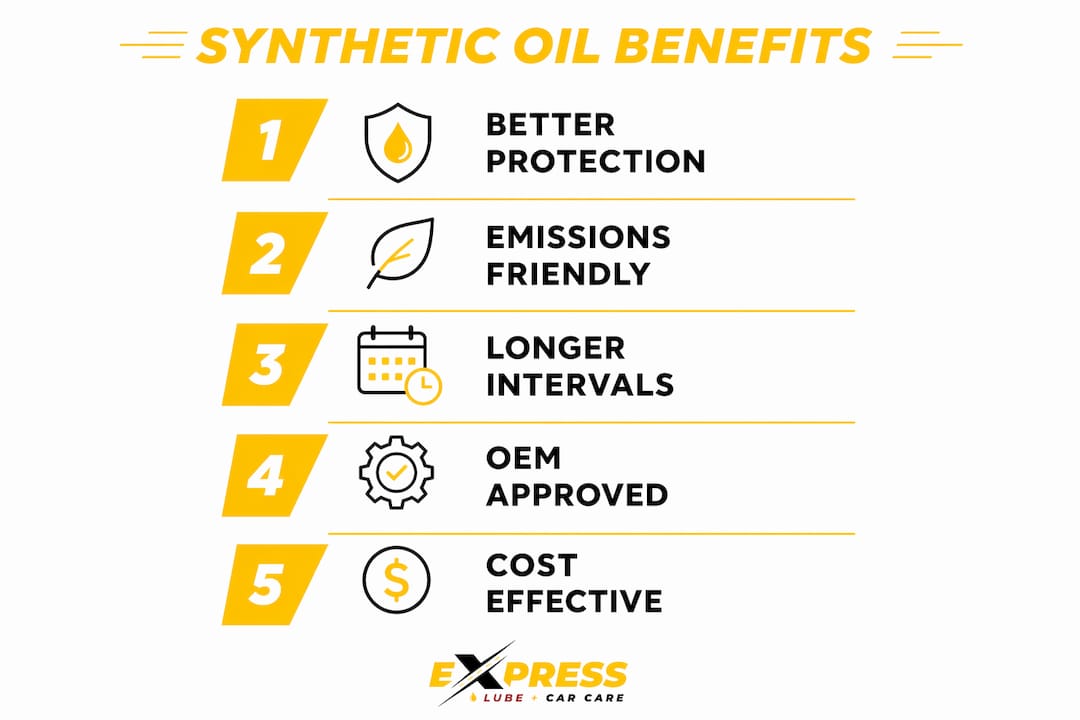
Conventional oil begins to degrade well before the 10,000-mile mark. When it breaks down, it leaves behind sludge deposits that restrict oil flow and accelerate wear on bearings, camshafts, and turbocharger components. Conventional oils cannot reliably provide the thermal stability and additive longevity that European drain intervals require.
The practical consequences of using the wrong oil at extended intervals include:
- Sludge buildup in oil passages, restricting flow to critical engine components
- Accelerated wear on turbocharger bearings due to oil film breakdown at high temperatures
- Additive depletion before the next scheduled oil change, leaving metal surfaces unprotected
- Increased risk of engine damage that does not show up until the repair bill arrives
Pro Tip: Check your oil’s condition at the halfway point of your drain interval. If it looks dark and gritty well before the scheduled change, your vehicle may have been running on the wrong oil spec. A quick inspection at Express Lube & Car Care takes only a few minutes and can catch problems early.
Why are OEM-specific oil approvals crucial for European engines?
Viscosity grade alone does not tell the full story of an oil’s compatibility with your engine. OEM approval codes encode specific additive chemistry, SAPS limits, and proprietary test results that viscosity grades cannot convey. BMW LL-04, Mercedes-Benz MB 229.52, and VW 504 00 are not just marketing labels. They represent oils that have passed manufacturer-specific tests for bore coatings, seal material compatibility, and emissions system protection.
BMW’s Nanoslide cylinder coating, for example, requires an oil that will not chemically react with the coating material. An oil that meets the right viscosity but lacks the BMW LL-04 approval may cause accelerated wear on that coating without triggering any warning light. Damage happens silently. The condition-based service systems in modern European cars monitor mileage and driving patterns, but they cannot detect when an oil’s additive package is wrong for the engine.
Follow these steps to verify OEM approval before your next oil change:
- Open your owner’s manual and locate the oil specification section. It will list the exact viscosity grade, ACEA category, and any OEM approval codes required.
- Cross-reference those codes against the oil label at the store or service center. The approval codes appear on the back label, not always on the front.
- Do not substitute an oil that matches only the viscosity. An oil labeled 5W-30 without the correct approval code is not a safe substitute for one carrying BMW LL-04 or VW 504 00.
- Check whether your vehicle requires a specific ACEA C-series rating for emissions system protection, particularly if it has a diesel particulate filter or a gasoline particulate filter.
Pro Tip: Keep a photo of your owner’s manual oil spec page on your phone. When you visit a service center, you can show the technician exactly what your vehicle requires rather than relying on memory or a quick cap check.
European-spec synthetic oils cost $10 to $15 per quart compared to $5 to $8 for domestic oils. That price difference is real, but the longer drain intervals make the total annual maintenance cost comparable. Protecting a $50,000 vehicle with the correct $12 per quart oil is not a luxury choice. It is the practical one.
What steps should you take when selecting synthetic oil for your European vehicle?
Choosing the right oil for a European vehicle requires more than grabbing the correct viscosity off the shelf. The owner’s manual is your primary reference, and it contains more detail than the oil filler cap. Consulting your owner’s manual for viscosity, ACEA category, and OEM approval codes is the only reliable starting point. The cap may only list a viscosity grade, which is not enough information on its own.
Here is a practical checklist for European vehicle owners:
- Confirm the viscosity grade. Your manual will specify a grade like 5W-30 or 0W-40. Do not assume a neighboring grade is close enough.
- Identify the ACEA category. Look for designations like ACEA C3 or ACEA A3/B4. The C-series is required for vehicles with diesel particulate filters or gasoline particulate filters.
- Verify OEM approval codes. BMW LL-04, Mercedes MB 229.52, VW 504 00, and similar codes must appear on the oil label, not just in the marketing description.
- Understand your SAPS requirements. Mid-SAPS oils protect emissions hardware. Using a full-SAPS oil in a DPF-equipped vehicle shortens filter life significantly.
- Follow the manufacturer’s drain interval. Do not shorten it unnecessarily with the right oil, and do not extend it if you have been running the wrong spec.
- Consult a qualified technician if you are unsure which approval code applies to your specific model year and engine variant. Approval codes can change between model years even for the same vehicle nameplate.
For practical oil change maintenance, keeping a simple log of each service with the oil brand, approval code, and mileage gives you a clear record. That record matters if you ever need to make a warranty claim or diagnose an engine issue.
Key takeaways
European vehicles require OEM-approved synthetic oil because their engines, emissions systems, and extended drain intervals demand oil chemistry that conventional and non-approved oils cannot provide.
| Point | Details |
|---|---|
| ACEA vs. API standards | ACEA C-series oils protect emissions hardware with low SAPS content; API ratings do not require this. |
| OEM approval codes matter | BMW LL-04, VW 504 00, and MB 229.52 encode chemistry that viscosity grades alone cannot confirm. |
| Extended drain intervals | European vehicles require oil that holds up for 10,000–15,000 miles; conventional oil cannot reliably do this. |
| Silent damage risk | Wrong oil causes wear and emissions system damage without triggering warning lights until repairs are needed. |
| Cost perspective | Higher per-quart cost of European synthetic oil is offset by longer drain intervals and avoided repair bills. |
What we have learned from years of European oil changes
At Express Lube & Car Care, the most common mistake we see from European vehicle owners is choosing oil by viscosity alone. A driver brings in a BMW 5 Series, points to the 5W-30 on the cap, and assumes any 5W-30 will do the job. The approval code is the part that actually matters, and it is the part most often overlooked.
The damage from wrong oil is not dramatic. There is no warning light, no strange noise in the first few weeks. The wear happens gradually, and by the time it shows up as an engine problem, the repair cost is far beyond what any oil savings could justify. We have seen this pattern often enough that we now make OEM approval verification a standard part of every European vehicle service conversation.
Synthetic oil is not a premium upgrade for European vehicles. It is the baseline requirement. Treating it as optional is like running a precision instrument on the wrong fuel and expecting it to perform the same. The manufacturers who built these engines specified synthetic oil with exact approval codes for a reason, and that reason is protecting the engine they engineered.
— Express Lube & Car Care
European vehicle oil changes at Express Lube & Car Care
European vehicles deserve service from technicians who know the difference between ACEA C3 and a generic 5W-30. At Express Lube & Car Care in Haltom City, our ASE-certified technicians verify OEM approval codes for every European vehicle we service, from Volkswagen and BMW to Mercedes-Benz and Audi.
No appointment is needed. We stock OEM-approved synthetic oils and follow manufacturer-specified drain intervals, so you leave with confidence that your engine has exactly what it needs. Visit our Haltom City service center for a fast, transparent oil change that meets your European vehicle’s exact specifications. If you have concerns about engine health beyond the oil change, our engine diagnostics team is ready to help.
FAQ
Why can’t European cars use regular American motor oil?
American API-rated oils do not meet the low-SAPS requirements or extended drain interval demands of European engines. Using them risks clogging diesel particulate filters and causing engine wear that conventional oil change intervals cannot prevent.
What does ACEA mean on an oil label?
ACEA is the European Automobile Manufacturers’ Association standard for engine oil performance. ACEA C-series ratings indicate oils formulated with low SAPS content to protect emissions systems in European vehicles.
How do I find the right OEM approval code for my European car?
Check your owner’s manual oil specification section. It lists the exact viscosity grade, ACEA category, and any manufacturer approval codes such as BMW LL-04, VW 504 00, or Mercedes MB 229.52 required for your engine.
Is European synthetic oil really worth the higher price per quart?
European-spec synthetic oil costs $10 to $15 per quart, but longer drain intervals of 10,000 to 15,000 miles make the total annual cost comparable to cheaper oils changed more frequently. Avoiding a diesel particulate filter replacement costing $1,250 to $2,500 makes the math clear.
Can I use a synthetic vs conventional oil comparison to decide for my European vehicle?
For European vehicles, that comparison is already decided by the manufacturer. Synthetic oil is not optional. The only real decision is which OEM-approved synthetic meets your specific vehicle’s ACEA category and approval code requirements.