

Service member car care differs from civilian vehicle maintenance by centering on operational readiness, deployment logistics, and military-specific legal protections rather than routine comfort or resale value. Where a civilian driver plans oil changes around mileage, a service member plans maintenance around mission timelines, PCS orders, and months-long storage needs. Understanding these differences saves you money, protects your vehicle, and keeps you legally covered whether you are stateside or deployed.
How service member car care differs from civilian maintenance
The military maintenance philosophy is defined by one standard: operational readiness. A vehicle must be ready to perform safely under any condition, not just comfortable enough for a daily commute. That priority shapes every maintenance decision a service member makes.
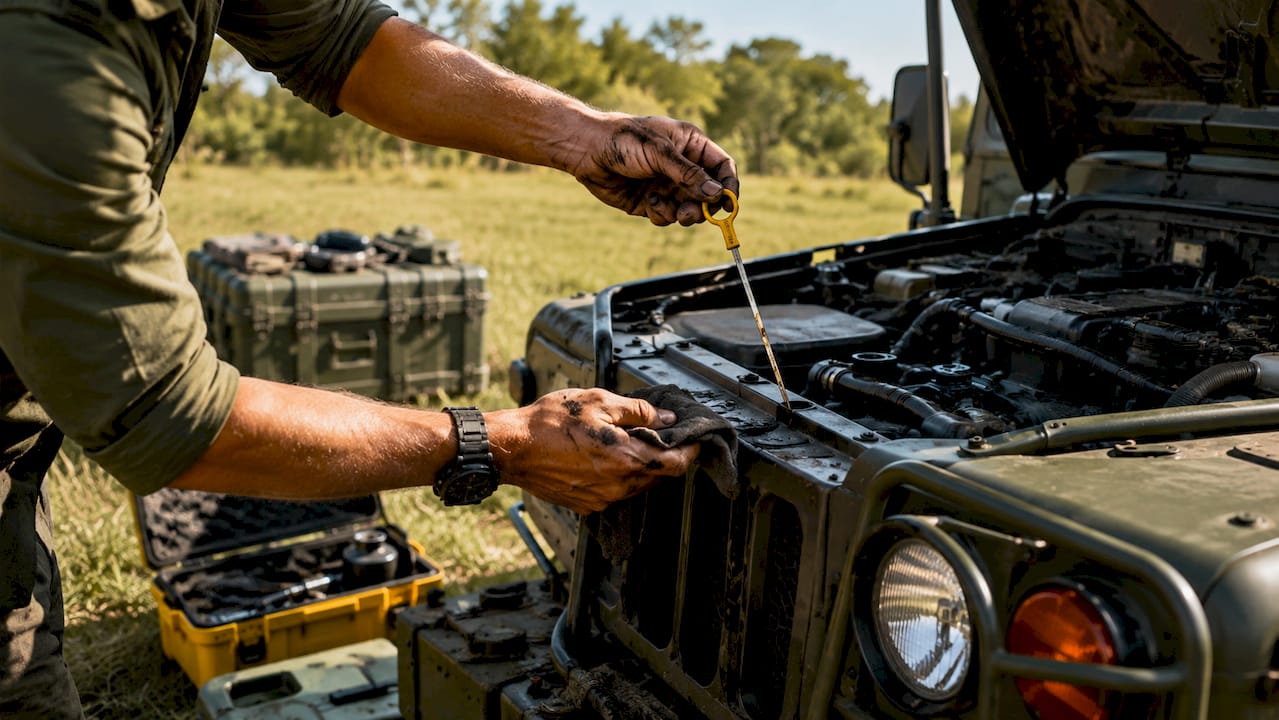
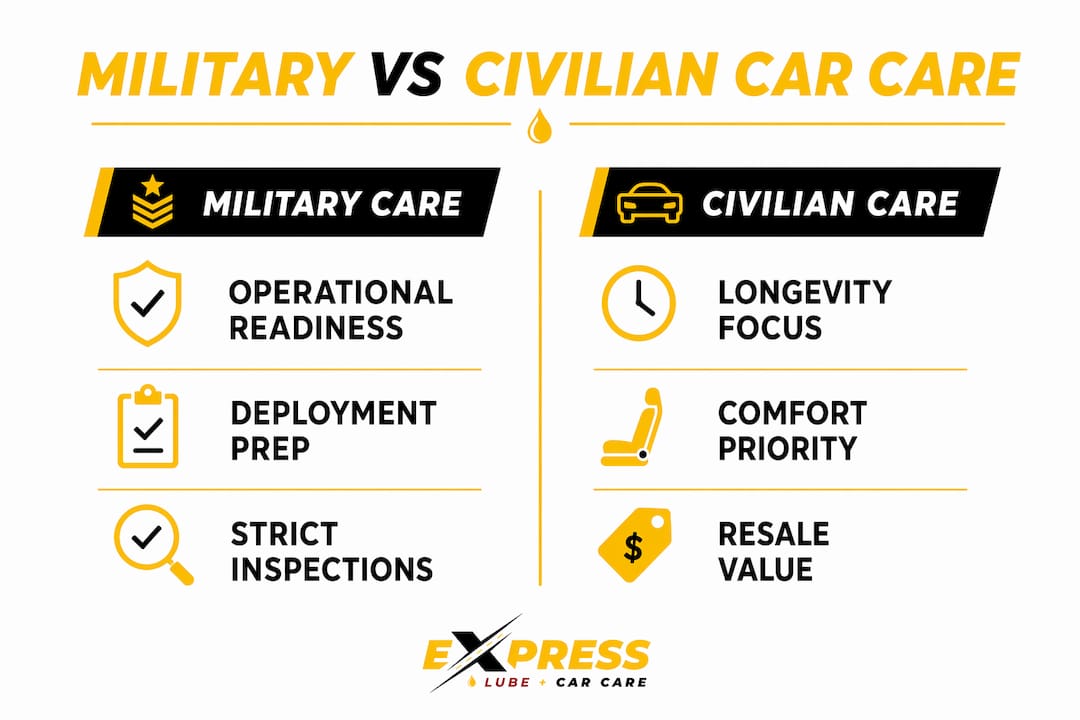
Civilian car care focuses on longevity, comfort, and resale value. You change your oil every 5,000 miles, rotate your tires seasonally, and fix what breaks when it becomes inconvenient. Military motorpool maintenance operates differently. Soldiers follow an “always on point” standard, meaning preventive maintenance happens on schedule regardless of whether a problem is visible. The goal is to prevent catastrophic failures like brake loss or mechanical breakdown during a mission, not just to extend vehicle life.
You can apply this mindset directly to your personal vehicle. Treat your car the way a motorpool sergeant treats a tactical vehicle: inspect it before every long trip, address small issues before they become dangerous ones, and never skip a scheduled service because the vehicle “seems fine.” That philosophy is the core difference between military and civilian maintenance cultures.
Pro Tip: Before any deployment or PCS move, run a full pre-trip inspection covering brakes, fluids, tires, and belts. A thorough vehicle inspection checklist takes under 60 minutes and can prevent a roadside emergency hundreds of miles from home.
What are your vehicle storage options during deployment?
Deployment creates a car care problem that no civilian driver faces: what do you do with your vehicle for six to twelve months while you are overseas? The answer depends on your base, your budget, and how much legal preparation you do before you leave.
On-post storage typically costs $25–$50 per month and is managed through your base transportation office or MWR facility. Off-base commercial storage runs $50–$175 per month depending on location and whether the unit is climate-controlled. That cost difference adds up fast over a long deployment, so booking early matters.
Securing a storage spot requires planning well ahead of your departure date. Contact your base transportation office at least 60 days before your deployment begins to reserve on-post space. Off-base facilities fill up quickly in military towns, so the same 60-day window applies there too.
Before you hand over your keys, take care of these steps:
- Disconnect the battery or use a battery tender to prevent drain.
- Fill the gas tank and add a fuel stabilizer to prevent moisture buildup.
- Inflate tires to the maximum recommended pressure to reduce flat-spotting.
- Change the oil before storage, not after, since used oil contains acids that corrode engine components.
- Place the vehicle on jack stands if storing longer than three months to protect tire integrity.
Legal preparation is just as critical as mechanical preparation. A notarized limited Power of Attorney, obtained free at your base legal office, authorizes a trusted person to manage storage payments, handle insurance claims, and retrieve your vehicle if needed. Without it, your car can become legally inaccessible while you are deployed. A limited POA covers only vehicle-related matters, which keeps your legal exposure narrow and your proxy’s authority clear.
The Servicemembers Civil Relief Act, or SCRA, adds another layer of protection. SCRA allows you to terminate a vehicle storage lease early without penalties when you receive deployment or PCS orders. It also prevents storage facilities from auctioning or placing liens on your property while you are on active duty. Provide a copy of your orders to invoke these protections.
Pro Tip: Store your vehicle with a car storage checklist that covers both mechanical prep and documentation. Skipping one step can cost you more than a month’s storage fees in repairs.
What should you know about vehicle transport during a PCS move?
Permanent Change of Station moves create a vehicle logistics challenge that civilian movers never encounter. The government partially reimburses vehicle shipping costs, but the process requires documentation, timing, and knowledge of base access rules.
The military reimburses 80–95% of actual vehicle transportation expenses for eligible PCS moves. Reimbursement eligibility depends on distance and vehicle limits set by your branch. You pay the carrier upfront, then submit your PCS orders and receipts to your finance office for reimbursement. Missing paperwork means missing money, so keep copies of everything.
Follow these steps to handle PCS vehicle transport correctly:
- Book your carrier as soon as you receive PCS orders, even tentatively. Early booking significantly improves carrier availability and reduces delays caused by military security clearances.
- Confirm whether your carrier holds a DoD contractor pass. Base access restrictions require carriers to have DoD credentials and proof of insurance. Gate delays alone can run 30–60 minutes and disrupt tight PCS schedules.
- Arrange an off-base pickup and delivery point if your carrier cannot access the installation. Most experienced military carriers already use off-base handoff locations to avoid gate complications.
- Gather required documents before the carrier arrives: your PCS orders, vehicle registration, proof of insurance, driver’s license, and a bill of lading signed at pickup.
- Complete a pre-trip vehicle inspection before the carrier takes your vehicle. Document existing damage with photos and note it on the bill of lading to protect your reimbursement claim.
- Submit your reimbursement packet to finance within the deadline specified in your orders. Late submissions are routinely denied.
One decision many service members overlook: whether to ship your vehicle at all during a short deployment versus a full PCS. If you are deploying for less than six months and returning to the same duty station, storage is almost always cheaper and simpler than shipping.
How can you maximize military car care discounts?
Most major auto service chains in military towns offer 10–20% military discounts that extend to retirees, reservists, National Guard members, and veterans with an honorable discharge. That eligibility is broader than most service members realize.
The most common misconception is that discounts apply only to active-duty personnel. Reservists, National Guard members, retirees, and honorably discharged veterans all qualify at most participating providers. The discount does not expire when you leave active service.
Here is how to get the most out of military car care discounts:
- State your military status when you first request a quote, not after the work is done. Proactively mentioning your status is the most reliable way to receive the discount.
- Bring your military ID, DD-214, or VA card as verification. Different providers accept different forms of proof.
- Ask whether the discount stacks with current promotions or coupons. Many providers allow stacking, but only if you ask.
- Check whether your branch or installation has a preferred provider agreement with local service centers. These agreements sometimes offer deeper discounts than the standard military rate.
- Use your SCRA benefit to cap interest rates at 6% on any pre-service financing tied to vehicle repairs or purchases.
The financial impact compounds over time. A 15% discount on two oil changes, a tire rotation, and a brake inspection per year adds up to real savings across a military career.
Key Takeaways
Service member vehicle care requires a readiness-first mindset, legal preparation for deployments, and proactive use of military-specific discounts that most providers extend to veterans and reservists alike.
| Point | Details |
|---|---|
| Operational readiness first | Treat your personal vehicle like a motorpool asset: inspect before every trip and never skip scheduled service. |
| Storage requires early action | Reserve on-post or off-base storage at least 60 days before deployment to secure the best rates and availability. |
| Legal prep protects your vehicle | Obtain a notarized limited Power of Attorney before deployment so a trusted person can manage your vehicle legally. |
| PCS transport needs documentation | Book carriers early, use off-base handoff points, and submit PCS orders with receipts to finance for reimbursement. |
| Discounts extend beyond active duty | Military discounts of 10–20% apply to retirees, reservists, National Guard members, and honorably discharged veterans. |
What military vehicle care taught me about personal maintenance
At Express Lube & Car Care, we work with a lot of service members and veterans in the DFW area, and the pattern we see most often is this: the ones who keep their personal vehicles in the best shape are the ones who never stopped thinking like a motorpool sergeant.
The military maintenance mindset is not complicated. It is just disciplined. You do not wait for a warning light. You do not skip an oil change because the car “feels fine.” You inspect, you document, and you act before small problems become expensive ones. That approach protects a $40,000 vehicle the same way it protects a $400,000 tactical truck.
What surprises me is how many veterans let that discipline slip after leaving service. Civilian life does not have a motorpool Monday to force the issue. Nobody hands you a maintenance form. The responsibility shifts entirely to you, and without that external structure, it is easy to fall behind.
My honest advice: build your own maintenance schedule and treat it like an order. Set calendar reminders for oil changes, tire rotations, and brake inspections. Keep a simple log of every service. When you bring your vehicle in, tell your technician what you track and what you have noticed. That communication is the civilian equivalent of a vehicle readiness report, and it makes every service appointment more effective.
— Express Lube & Car Care
Vehicle care for military personnel in Haltom City
Service members and veterans in the DFW area deserve a shop that understands their schedule and their standards.
Express Lube & Car Care provides engine diagnostics and repair with no appointment required, so you can get in and out on your timeline, not ours. Our ASE-certified technicians understand the difference between a vehicle that needs a routine oil change and one that needs a full readiness check before a long PCS drive. We offer military discounts and transparent pricing, so you know exactly what you are paying before any work begins. Stop by our Haltom City location or book your appointment online today.
FAQ
How does military car maintenance differ from civilian care?
Military car maintenance prioritizes operational readiness and safety above all else, while civilian maintenance focuses on longevity and comfort. Service members apply a preventive maintenance standard that addresses problems before they cause failures, not after.
What documents do I need for PCS vehicle transport reimbursement?
You need your PCS orders, vehicle registration, proof of insurance, driver’s license, and a signed bill of lading from the carrier. Submit these with your receipts to your finance office within the deadline stated in your orders.
Does the SCRA protect my vehicle storage lease during deployment?
Yes. The SCRA lets you terminate a vehicle storage lease early without penalties when you receive deployment or PCS orders. It also prevents storage facilities from auctioning or placing liens on your vehicle while you are on active duty.
Who qualifies for military car care discounts?
Most providers extend discounts to active-duty personnel, reservists, National Guard members, retirees, and veterans with an honorable discharge. Bring your military ID, DD-214, or VA card as verification and state your status when requesting a quote.
How far in advance should I reserve deployment vehicle storage?
Contact your base transportation office or MWR facility at least 60 days before your deployment date. Off-base commercial storage in military towns fills quickly, so the same 60-day window applies for those facilities as well.