

Most vehicles need a transmission fluid change at intervals often ranging from tens of thousands to around sixty thousand miles, though some manufacturers claim their transmissions never need it at all. Start with your owner’s manual, check the fluid’s actual condition, and lean conservative if you tow, haul, or drive mostly short trips. When in doubt, book a fluid inspection rather than guess.
TL;DR:
- Transmission fluid should be checked regularly, especially if towing, driving in stop-and-go traffic, or living in hot climates, as these conditions demand earlier service.
- CVTs and DSG transmissions require more frequent and carefully specified fluid changes, typically around 30,000 to 40,000 miles, to prevent internal damage.
- Waiting beyond recommended intervals risks accelerated wear, rough shifting, and costly repairs, especially if fluid shows dark color, burnt smell, or metallic flakes.
- The choice between drain-and-fill and full flush depends on vehicle mileage and condition, with drain-and-fill favored for higher-mileage transmissions to reduce risk.
- Using the correct, manufacturer-specific fluid is critical for maintaining warranty coverage and preventing internal damage, especially in CVTs and dual-clutch units.
Table of Contents
- Transmission Fluid Change Interval Ranges Explained
- How to Decide: Manual, Driving Habits, and Fluid Testing
- CVT, DSG, and Other Transmissions Need Different Rules
- What Fluid Color and Smell Are Telling You
- Drain-and-Fill or Full Flush: Which One Fits Your Mileage?
- What to Bring and Ask For at Your Service Appointment
- Shop-Backed Recommendation From Express Lube & Car Care
- What Happens If You Skip Transmission Fluid Changes
- Choosing the Right Transmission Fluid Type
- Does Changing Transmission Fluid Affect Your Warranty?
- What Conventional Wisdom Gets Wrong About This Topic
- Schedule Your Transmission Fluid Check With Express Lube & Car Care
- Sources
- FAQ
Transmission Fluid Change Interval Ranges Explained
The mileage numbers you see online vary because they’re answering different questions. Some shops quote 30,000 to 40,000 miles based on what they see when they pull the pan on a customer’s car. Others cite 30,000 to 60,000 miles as a general rule that fits most gas-powered automatics. Then there are the manufacturer specs claiming fluid is good past 100,000 miles, sometimes labeled “lifetime” fluid.
All three numbers can be technically accurate. They’re just describing different standards.
- Lower tens of thousands of miles: common recommendation from independent shops based on visible fluid degradation
- Mid-range tens of thousands of miles: a broadly safe middle ground for most owners and driving styles
- Over one hundred thousand miles: manufacturer “lifetime” or extended-interval specs, often tested under controlled lab conditions rather than real-world stress
Real-world guidance from Consumer Reports notes that service intervals can stretch beyond 100,000 miles on paper, but everyday driving conditions often call for earlier attention. If you tow a trailer, drive in stop-and-go traffic, or live somewhere with brutal summers, shorten your interval toward the 30,000 to 40,000 mile end. If you mostly drive highway miles in mild weather with a light load, the manufacturer’s longer schedule is probably fine.
A standard drain-and-fill service typically costs a moderate two-hundred-dollar figure and takes under an hour. A full flush costs more and takes longer, which matters when you’re weighing options later in this article.
How to Decide: Manual, Driving Habits, and Fluid Testing
Your owner’s manual is the starting point, not the final word. Look for a maintenance section that lists “normal” and “severe” service schedules separately. Most owners are unknowingly in the severe category.
Here’s how to figure out where you land:
- Pull your manual’s maintenance chart. Find the mileage interval and note whether it distinguishes normal from severe use.
- Check yourself against severe-use criteria. Towing, frequent short trips under 10 miles, stop-and-go city driving, extreme heat, and dusty or off-road conditions all qualify.
- Decide if fluid analysis makes sense. If you run a fleet, tow heavily, or bought a used vehicle with no service history, a fluid analysis test tells you exactly what’s happening instead of relying on mileage alone. Allison’s heavy-duty guidance recommends fluid analysis specifically because duty cycles vary so much that mileage alone isn’t a reliable predictor.
- Split the difference if you’re unsure. When your driving mixes normal and severe conditions, aim for the shorter end of your manual’s range.
Pro Tip: Pop the dipstick (if your transmission has one) and check the fluid in under two minutes. It’s the fastest early-warning system you have, and it costs nothing.
CVT, DSG, and Other Transmissions Need Different Rules
Not every transmission plays by the same rules, and treating them identically is how expensive damage happens.
- CVTs (continuously variable transmissions): These typically need fluid changes at moderate intervals around thirty thousand miles, and the fluid spec is non-negotiable. CVT fluid is chemically different from standard automatic transmission fluid, and using the wrong type can damage the belt or variator, according to interval data compiled by Perry’s Auto.
- DSG and dual-clutch gearboxes: Wet-clutch DSG units commonly call for service at intervals near forty thousand miles. The clutch packs are sensitive to fluid degradation in a way that traditional automatics aren’t, so skipping intervals here tends to show up as rough or delayed shifts.
- Sealed “lifetime” automatics: These can run longer between services, but “lifetime” assumes normal driving. Towing or severe use still forces an earlier interval even on a sealed unit.
- Manual transmissions: These use a different fluid entirely (often gear oil rather than ATF) and generally go longer between changes, though the exact interval still depends on the vehicle.
What Fluid Color and Smell Are Telling You
Healthy automatic transmission fluid is bright red and see-through enough to read a dipstick through it. KBB’s fluid diagnostic guide lays out the warning signs clearly, and they’re easy to remember once you’ve seen them once.
- Brown or black fluid: Oxidized and breaking down; schedule service soon
- Burnt smell: A sign of overheating or friction material burning inside the transmission
- Metallic flakes or shimmer: Internal wear, likely from gears or bearings grinding against each other
- Milky pink or “strawberry milkshake” color: Coolant has mixed into the transmission fluid; this is a serious problem, and the vehicle should not be driven until it’s inspected
Independent shop testing backs up why waiting isn’t a great strategy. A side-by-side comparison from Motor1 showed fluid at 35,000 miles noticeably darker and dirtier than new fluid, well before many “lifetime” specs would suggest a change is needed.
Drain-and-Fill or Full Flush: Which One Fits Your Mileage?
These two services aren’t interchangeable, and picking the wrong one on a high-mileage transmission can cause more harm than good.
- Drain-and-fill removes the fluid sitting in the pan and replaces it, typically exchanging 30% to 40% of the total fluid in one service. It’s gentler and generally the safer choice for transmissions past 70,000 miles.
- Full flush uses pressure to exchange nearly all the fluid in one pass. It sounds thorough, but on older transmissions with built-up deposits, that aggressive exchange can dislodge material that was otherwise doing a job (however unglamorous) of packing worn seals.
- Ask before you agree to either. A good shop should tell you how much fluid gets replaced, whether the filter is serviced, and why they’re recommending one method over the other for your specific mileage.
What to Bring and Ask For at Your Service Appointment
Walking in prepared saves time and gets you a better outcome. Bring your VIN or owner’s manual so the shop can confirm the exact fluid spec, since using the wrong fluid type in a CVT or DSG causes real damage.
- Ask for the specific fluid spec being used, not just “transmission fluid”
- Confirm whether a filter change is included in the service
- Request digital vehicle inspection photos showing fluid condition before and after
- Get a written receipt listing fluid type, amount used, and the next recommended interval
Pro Tip: Keep that receipt in your glove box. If you ever sell the car or switch shops, proof of a recent, correctly specified fluid change adds real credibility to your maintenance history.
Shop-Backed Recommendation From Express Lube & Car Care
Express Lube & Car Care starts every transmission service with the manufacturer’s schedule as the baseline, then adjusts based on how the vehicle is actually driven. If you tow, drive mostly short trips, or put on heavy mileage in extreme heat, the interval gets shortened rather than left to a generic number.
ASE-certified technicians confirm the correct fluid spec before touching the vehicle, which matters most on CVTs and DSG units where the wrong fluid causes damage. On higher-mileage transmissions, a drain-and-fill is generally preferred over a full flush. Every visit includes digital vehicle inspection photos so you can see the fluid’s condition yourself, not just take someone’s word for it. Combined with RepairPal certification and no-appointment service, it’s built for owners who want a straight answer without a wait.
What Happens If You Skip Transmission Fluid Changes
Old transmission fluid doesn’t just lose effectiveness gradually. It breaks down chemically, loses its ability to cool and lubricate internal components, and starts letting metal parts grind against each other instead of gliding past on a protective film.
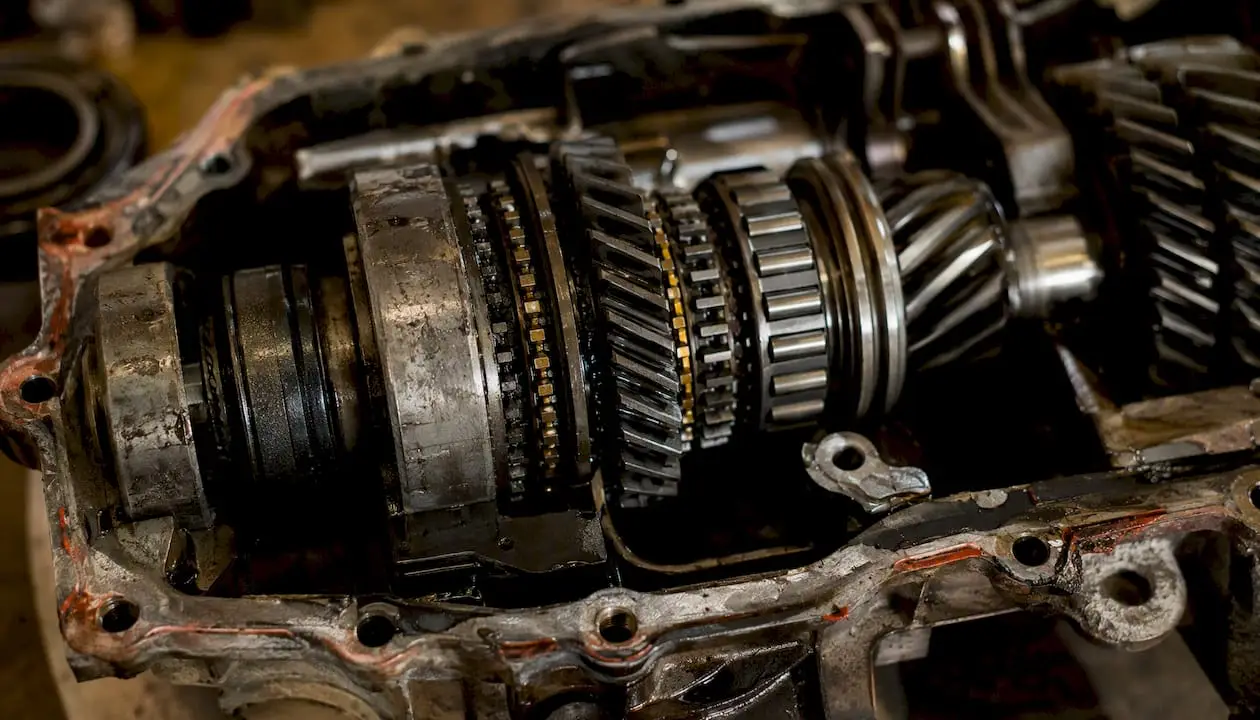
The first symptom is usually subtle: a slightly delayed shift, or a shift that feels rougher than it used to. If you’re already seeing signs like rough shifting or hesitation, that’s worth reading up on directly through common symptoms of a slipping transmission. Left unaddressed, degraded fluid accelerates wear on clutch packs, seals, and the torque converter. What started as a $200 fluid service becomes a $3,000 to $5,000 rebuild, and in the worst cases, a transmission that’s beyond economical repair.
This isn’t a scare tactic; it’s simple mechanical cause and effect. Transmissions rely entirely on fluid for lubrication, cooling, and hydraulic pressure to shift gears. Ask the fluid to do that job past its useful life, and something inside eventually pays the price. If a transmission has already failed and repair costs exceed the vehicle’s value, it’s worth knowing what your options are for a car with a blown transmission before sinking more money into it.
Choosing the Right Transmission Fluid Type
There’s no such thing as universal transmission fluid, despite what a bargain bottle on a store shelf might imply. Automatic transmission fluid comes in multiple formulations (Dexron, Mercon, and various manufacturer-specific specs among them), and they aren’t interchangeable. CVT fluid is its own category entirely, formulated to handle the friction requirements of a belt-and-pulley system rather than traditional gear sets.
The safest way to get this right is matching the fluid to your vehicle’s specific manufacturer specification, found in your owner’s manual or on a sticker near the transmission dipstick. That spec is usually a code, something like “Dexron VI” or a manufacturer-specific number, and it’s not optional. Using a compatible-sounding but incorrect fluid can affect shift quality immediately and cause internal damage over time, particularly in CVTs and DSG units where the fluid also plays a role in clutch engagement.
If you’re unsure what your vehicle needs, don’t guess based on what “most cars” use. A shop with access to manufacturer fluid databases can confirm the exact spec in a couple of minutes, which is a lot cheaper than correcting a mistake later.
Does Changing Transmission Fluid Affect Your Warranty?
Following your manufacturer’s maintenance schedule, including transmission service, is generally required to keep a powertrain warranty valid. Skipping recommended services or using the wrong fluid type can give a manufacturer grounds to deny a warranty claim if the transmission later fails.
That said, manufacturers can’t require you to use their dealership for service. Federal law protects your right to have maintenance performed at an independent shop, as long as the correct parts and fluid specifications are used and you keep documentation. That’s exactly why a receipt showing fluid type, amount, and service date matters. It’s not just a maintenance record; it’s protection if you ever need to make a warranty claim.
If your vehicle is still under a “lifetime” fluid claim from the manufacturer, check whether that claim has mileage or condition caveats. Many do. Reading the fine print now saves a headache later.
What Conventional Wisdom Gets Wrong About This Topic
The “lifetime fluid” marketing claim is the most misleading idea in transmission maintenance, not because it’s dishonest, but because it’s incomplete. Those specs are usually tested under conditions that don’t match how most people actually drive: no towing, no extreme heat, no stop-and-go traffic five days a week. Consumer Reports has pointed out that real-world use typically demands earlier attention than lab-tested intervals suggest.
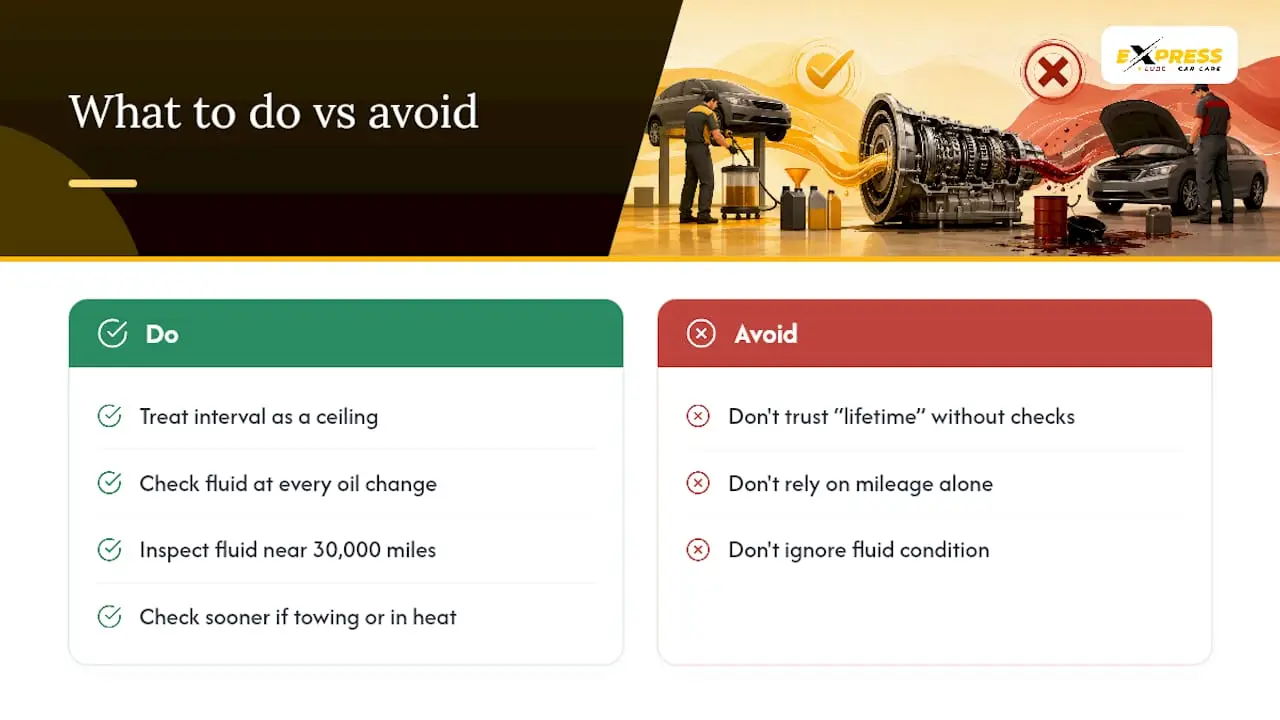
The bigger mistake owners make isn’t ignoring intervals entirely. It’s assuming a single number applies to their exact vehicle without ever checking the fluid itself. A dipstick check takes less time than pumping gas, yet most drivers go years without doing it. Fluid condition tells you more than mileage does, because two identical cars driven differently will show completely different wear patterns at the same odometer reading.
Our take: treat the manufacturer interval as a ceiling, not a target. Check fluid condition at every oil change. If you’re within striking distance of 30,000 miles and you tow, commute in heavy traffic, or live somewhere hot, don’t wait for a number on a chart to tell you what a look at the fluid already would.
— Express Lube & Car Care
Schedule Your Transmission Fluid Check With Express Lube & Car Care
Express Lube & Car Care gets you real answers on your transmission’s condition the same day, with no appointment required and no guessing about which fluid your vehicle needs. Bring your VIN or owner’s manual, and a technician will confirm the exact fluid spec before recommending a drain-and-fill or flagging anything that needs a closer look.
Walk in during business hours, and you’ll get straightforward answers backed by ASE-certified technicians and a digital inspection report with photos, not a vague recommendation to “keep an eye on it.” If cost is a concern, current customers can save with the $25 off oil changes offer, and larger repair needs can be spread out through flexible financing options. Ready to find out where your transmission actually stands? Schedule your visit today.
Sources
- When do I need to change my transmission fluid? — KBB
- Maintain your car’s transmission and avoid costly repairs — Consumer Reports
- New vs. 35,000 miles transmission fluid — Motor1
- Fcocrv
FAQ
How often do I really need to change transmission fluid?
Most vehicles need service at moderate mileage intervals, though your specific interval depends on your manufacturer’s schedule and whether you drive under severe conditions like towing or frequent short trips.
Can transmission fluid last 10 years?
Some manufacturers advertise “lifetime” fluid that can technically last well beyond typical mileage under ideal conditions, but real-world driving, especially towing, heat, or stop-and-go traffic, usually calls for service well before that.
Why do mechanics say don’t change transmission fluid?
This usually applies to older, high-mileage transmissions where a full flush can dislodge built-up deposits that were helping seal worn components; a gentler drain-and-fill is typically the safer alternative in those cases.
Is 150,000 miles too late to change transmission fluid?
It’s not ideal, but servicing degraded fluid even late is better than leaving it alone indefinitely. Experts note that servicing later than recommended can still extend transmission life meaningfully compared to never servicing it at all, and a professional inspection at higher mileage helps determine the safest approach.