

Engine oil turns dark because it is actively trapping soot, combustion byproducts, and microscopic contaminants, which is exactly what it is designed to do. This process, called oil darkening, is the result of detergent and dispersant additives suspending particles to keep your engine clean. Color alone is not a reliable indicator of oil health. Full synthetic oil is typically good for 7,500–10,000 miles before it needs changing, regardless of how dark it looks. Understanding why engine oil turns dark helps you avoid unnecessary early changes and spot the warning signs that actually matter.
Why does engine oil turn dark during normal operation?
Dark oil is not a problem. It is proof that your oil is working. Engine oil darkens through several normal chemical and physical processes that happen every time you drive.
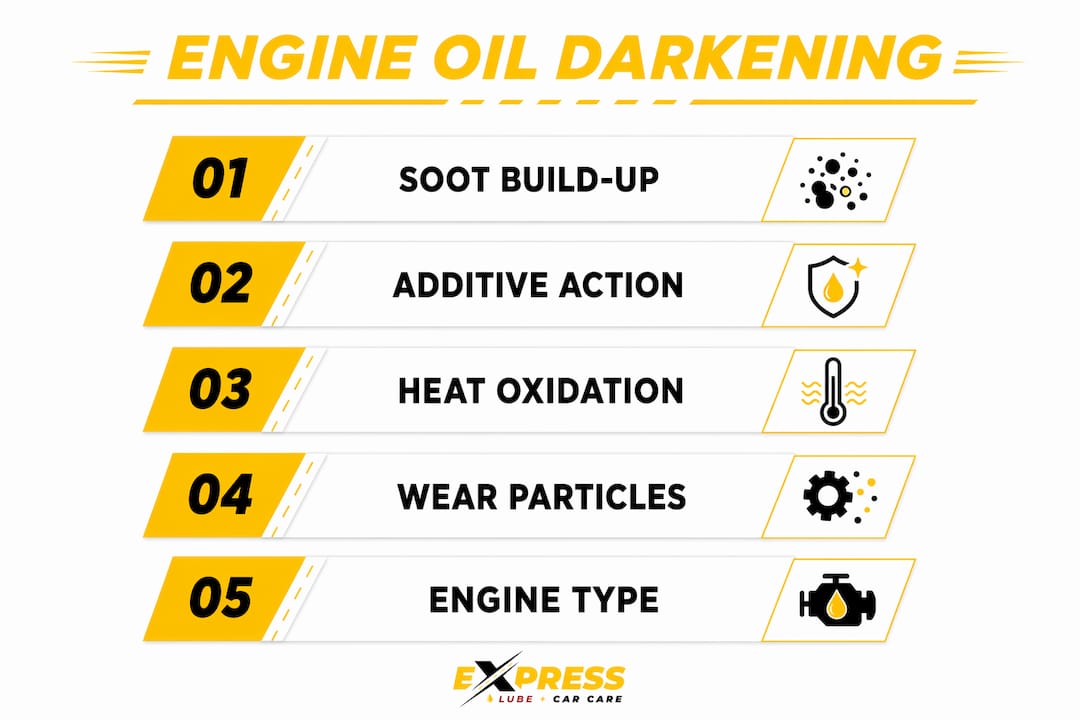
Soot and combustion byproducts
Every combustion cycle produces soot, unburned fuel particles, and exhaust gases. Some of those gases slip past the piston rings into the crankcase, a process called blow-by. The oil absorbs these byproducts to keep them from building up on engine surfaces. Oil absorbs soot and heat as part of its cleaning function, and that absorption is what turns it brown or black over time.
Additive chemistry at work
Modern engine oils contain detergents and dispersants specifically designed to suspend contaminants. Detergents and dispersants keep those particles floating in the oil rather than sticking to engine parts as sludge. The darker the oil gets, the more contaminants it has captured. That is the additives doing their job, not the oil failing.
Heat exposure and oxidation
High engine temperatures cause oil molecules to oxidize over time. Oxidation changes the oil’s molecular structure and contributes to color change. This is a gradual process, but it accelerates under stop-and-go driving, towing, or high-load conditions.
Microscopic wear particles
As engine components move against each other, they shed tiny metal particles. Wear particles suspended in oil contribute to darkening and are normal in moderate amounts. Their presence in small quantities signals normal engine aging, not imminent failure.
Diesel and GDI engines darken oil faster
Diesel engines produce far more soot per combustion cycle than gasoline engines. Diesel oil turns black within 1,000–2,000 miles, which is completely normal for diesel operation. Modern Gasoline Direct Injection (GDI) engines also darken oil faster than older port-injection engines. GDI engines produce smaller carbon particles at high pressure, which disperse into the oil more quickly. If you drive a newer GDI vehicle and notice dark oil sooner than expected, that is a design characteristic, not a defect.
Pro Tip: If you recently switched to a high-quality full synthetic oil, do not be surprised if it darkens faster than a conventional oil did. Better detergent packages clean more aggressively, which means they pick up more contaminants.
Can dark oil signal a problem? How to tell when it needs changing
Dark brown or black oil is normal. Certain other oil conditions are serious warnings that require immediate attention.
Oil colors and what they mean
| Oil color | Likely cause | Urgency |
|---|---|---|
| Dark brown or black | Normal soot and additive action | Follow your mileage interval |
| Milky or gray | Coolant contamination (head gasket leak) | Stop driving, seek repair immediately |
| Metallic or sparkly | Internal engine wear particles | Schedule diagnostics promptly |
| Thick, gritty, or tar-like | Severe degradation or sludge buildup | Change oil and inspect engine |
| Light tan or honey-colored | Fresh oil, no contamination | Normal, no action needed |
Milky or gray oil is a serious warning. It means coolant is mixing with the oil, usually from a failed head gasket or cracked engine block. Coolant contamination repairs cost between $900 and $6,000, and internal engine wear repairs can reach $1,500–$8,000. Catching these problems early through regular checks protects you from those costs.
A metallic sheen in the oil means metal-on-metal wear is producing particles faster than normal. That is not the gradual, moderate wear that is expected. It signals accelerated damage that needs a professional diagnosis.
Thick, gritty oil with a burnt smell is another red flag. Burnt smell or gritty texture signals oil that has broken down and can no longer protect engine surfaces. At that point, the oil is a liability, not an asset.
Pro Tip: Rub a drop of oil between your fingers. Fresh or healthy oil feels slippery. Oil that feels gritty, sandy, or leaves a dark residue that does not wipe clean easily has likely degraded beyond its useful life.
Why does oil turn dark right after an oil change?
You just had your oil changed, and a few days later the dipstick already shows dark oil. This is one of the most common concerns drivers bring to Express Lube & Car Care, and it almost always has a straightforward explanation.
The main reason is residual old oil. When you drain an engine, not all the old oil leaves. Up to 10–20% of old oil can remain in galleries, passages, and the oil filter housing. When fresh oil circulates at startup, it mixes with that residual oil and picks up the contaminants it was holding. The result is oil that looks dark within the first few hundred miles.
Several other factors speed up early darkening after a service:
- Poor maintenance history. Vehicles that went too long between changes have more sludge and residue coating internal surfaces. Fresh oil dissolves and suspends that buildup quickly.
- Oil filter quality. A low-quality filter may not capture fine particles effectively, allowing them to circulate and darken the oil faster.
- Short trips. Frequent short drives prevent the engine from reaching full operating temperature. Moisture and fuel vapors accumulate in the oil, accelerating contamination.
- Engine age. Older engines with more wear produce more particles, which the oil picks up and suspends immediately.
For vehicles with a history of neglected maintenance, an engine flush before the oil change can remove built-up sludge and give fresh oil a cleaner start. Ask a technician whether your vehicle’s history warrants one.
Pro Tip: Visual inspection right after an oil change tells you almost nothing useful. The oil will darken quickly regardless of quality. Track your mileage and follow the interval your manufacturer recommends instead.
How to monitor engine oil health beyond color
Color is the least reliable tool you have for judging oil condition. These methods give you a much clearer picture.
Follow mileage and time intervals
The most reliable guide to oil health is your manufacturer’s recommended interval. For full synthetic oil, that is typically 7,500–10,000 miles. Synthetic blends generally fall in the 5,000–7,500 mile range. Check your owner’s manual for the exact figure for your vehicle. You can also review how fleet oil change intervals differ by engine type if you manage multiple vehicles.
Check smell, texture, and level regularly
- Smell the oil on the dipstick. Fresh oil has a mild petroleum smell. A sharp, burnt odor means the oil has degraded.
- Feel the texture. Rub it between your fingers. Slippery is good. Gritty or thick is a warning.
- Check the level. Oil that drops significantly between changes may indicate a leak or that the engine is burning oil.
- Look at the color in context. Dark brown is normal. Milky, metallic, or tar-like is not.
Consider a professional oil analysis
Oil analysis tests cost $30–$50 and provide quantitative data on additive levels, contamination, and wear metals. That data is far more accurate than any visual check. Oil analysis is especially useful for high-mileage vehicles, diesel engines, or any car showing unusual symptoms.
Know when to get professional eyes on it
If your oil looks milky, smells burnt, or drops faster than expected, do not wait for your next scheduled interval. Bring the vehicle in for a professional inspection. The oil change tips from Express Lube & Car Care cover what to watch for between services and how to build a maintenance routine that protects your engine long term.
Key takeaways
Dark engine oil is a sign of normal oil function, not failure. The real indicators of oil health are smell, texture, level, and mileage interval, not color.
| Point | Details |
|---|---|
| Dark oil is normal | Oil darkens as it traps soot and contaminants, which is its designed function. |
| Color alone is unreliable | Follow mileage intervals (7,500–10,000 miles for full synthetic) rather than color. |
| Warning signs are specific | Milky, metallic, or gritty oil signals real problems that need immediate attention. |
| Early darkening after a change is expected | Residual old oil mixes with fresh oil at startup, causing quick color change. |
| Oil analysis beats visual checks | A $30–$50 oil analysis provides accurate data on oil condition and wear metals. |
What years of oil changes have taught us about dark oil
At Express Lube & Car Care, we see drivers come in regularly convinced their oil is failing because it looks black on the dipstick. The honest truth is that most of the time, that dark oil is doing exactly what it should. The drivers who change oil based on color alone often change it too early, spending money they do not need to spend.
The more interesting pattern we have noticed is the opposite problem. Drivers who assume dark oil is always fine sometimes ignore the texture and smell changes that actually matter. A car that comes in with oil that looks dark but also smells burnt and feels gritty has a real problem. The color was not the clue. The smell and texture were.
The best maintenance mindset is not reactive and not obsessive. It is methodical. Check your oil every month, note the level and feel, and follow your manufacturer’s interval. If something smells wrong or feels wrong, get it checked before the next scheduled service. That approach costs less over time and keeps engines running longer than any color-based guessing game ever will.
— Express Lube & Car Care
Professional oil service at Express Lube & Car Care

Dark oil raises questions, and those questions deserve real answers from a technician who can actually look at your engine. Express Lube & Car Care in Haltom City provides professional oil change services with no appointment needed, so you can get a clear diagnosis without rearranging your schedule. ASE-certified technicians check oil condition, level, and any related symptoms during every visit. If something beyond a routine change is needed, the team also offers engine diagnostics and repair to catch problems before they become expensive ones. Stop by when you are ready, and leave knowing exactly where your engine stands.
FAQ
What does dark engine oil actually mean?
Dark engine oil means the oil is suspending soot, combustion byproducts, and contaminants, which is its normal function. It does not automatically mean the oil needs to be changed.
How often should I change my engine oil?
Full synthetic oil is typically good for 7,500–10,000 miles. Synthetic blends generally last 5,000–7,500 miles. Always follow your vehicle manufacturer’s specific recommendation.
Why is my oil dark right after an oil change?
Up to 10–20% of old oil remains in engine passages after draining. Fresh oil mixes with that residual oil at startup, causing it to darken quickly. This is normal and not a sign of a bad oil change.
What oil color is actually a warning sign?
Milky or gray oil signals coolant contamination, often from a head gasket failure. Metallic or sparkly oil indicates accelerated internal wear. Both require immediate professional attention.
Is dark oil in a diesel engine normal?
Yes. Diesel engines produce significantly more soot per combustion cycle than gasoline engines. Diesel oil typically turns black within 1,000–2,000 miles, which is expected and normal for diesel operation.