
A 60–90 second visual check before every trip prevents most avoidable roadside failures. That’s the single most important habit you can teach a new driver, and it costs nothing but attention. The National Safety Council’s pre-drive checklist confirms that simple everyday checks, practiced until habitual, reduce maintenance apathy and improve safety. Express Lube & Car Care’s ASE-certified technicians back this up daily: the vehicles that come in with the worst problems are almost always the ones nobody was watching. If you find a leak, hear grinding brakes, or spot a persistent warning light, get to a shop within 24 hours.
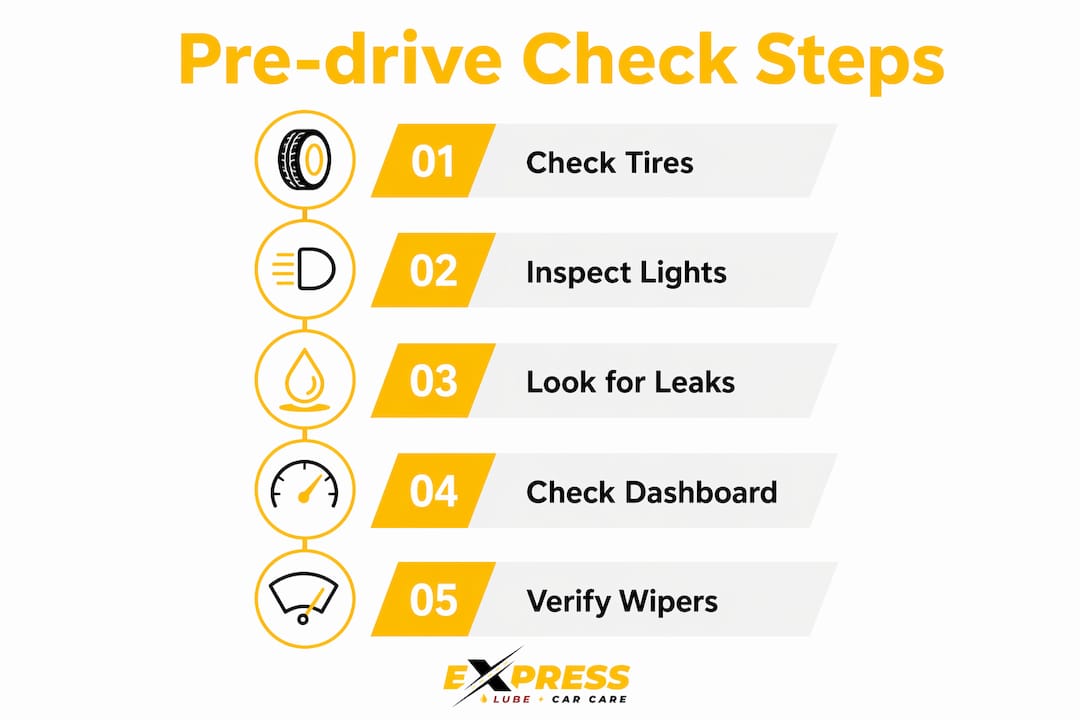
Before every trip, run through these six checks:
- Tires: Look for obvious flats or sidewall damage; check that all four look equally inflated.
- Lights: Walk around and confirm headlights, taillights, and brake lights are working.
- Fluid spots: Glance under the car for fresh puddles (oil is dark, coolant is often green or orange).
- Dashboard: Scan for any warning lights before pulling out of the driveway.
- Wipers and washer fluid: Confirm blades aren’t torn and the reservoir isn’t empty.
- Fuel: Check the gauge. Running out of gas is the most preventable breakdown there is.
Deferred maintenance leads to significantly higher repair costs and creates real safety risks like blowouts or brake failure. Catching problems early is always cheaper than fixing them after they escalate.
Table of Contents
- How to run the 60–90 second pre-drive check every time
- Simple maintenance tasks young drivers can safely learn
- What to leave to the professionals
- Service intervals, costs, and time expectations
- How to read warning lights without panicking
- How parents and fleet managers can build lasting maintenance habits
- Key Takeaways
- Our perspective on teaching car maintenance
- Express Lube & Car Care is ready to help young drivers in Haltom City
- Useful sources and further reading
- FAQ
How to run the 60–90 second pre-drive check every time
Do this every single time you get in the car. It takes less time than buckling your seatbelt and adjusting the mirrors, and it builds the kind of awareness that keeps a vehicle reliable for years.
- Walk around the car (10–15 seconds). Check all four tires for obvious damage or low pressure. Confirm no new dents or damage from overnight parking.
- Check the lights (10–15 seconds). Turn on headlights and hazards, then walk around to verify front and rear lights are working. Ask a passenger to press the brakes while you check brake lights.
- Glance under the car (5–10 seconds). A fresh puddle means a leak. A dry driveway means you’re clear.
- Scan the dashboard (5 seconds). Start the engine and wait three seconds. Any light that stays on after startup needs attention.
- Check wipers and fluid (5 seconds). Give the wipers one swipe. If they streak badly, note it for replacement soon.
- Confirm fuel level (5 seconds). Never start a trip below a quarter tank.
Pro Tip: Link this routine to a trigger you already use — grabbing your keys or plugging in your phone. Habits stick when they attach to something you already do automatically.
Simple maintenance tasks young drivers can safely learn
Building basic car care skills gives young drivers confidence and cuts down on avoidable shop visits. These tasks are safe to learn with a little guidance, and most take under ten minutes.
- Tire pressure check. Use an inexpensive tire gauge (under $10 at any auto parts store). The correct pressure is on a sticker inside the driver’s door, not on the tire sidewall. Check monthly and before long trips. For the tread, use the penny test: insert a penny into the groove with Lincoln’s head pointing down. If you can see the top of his head, the tread is too low.
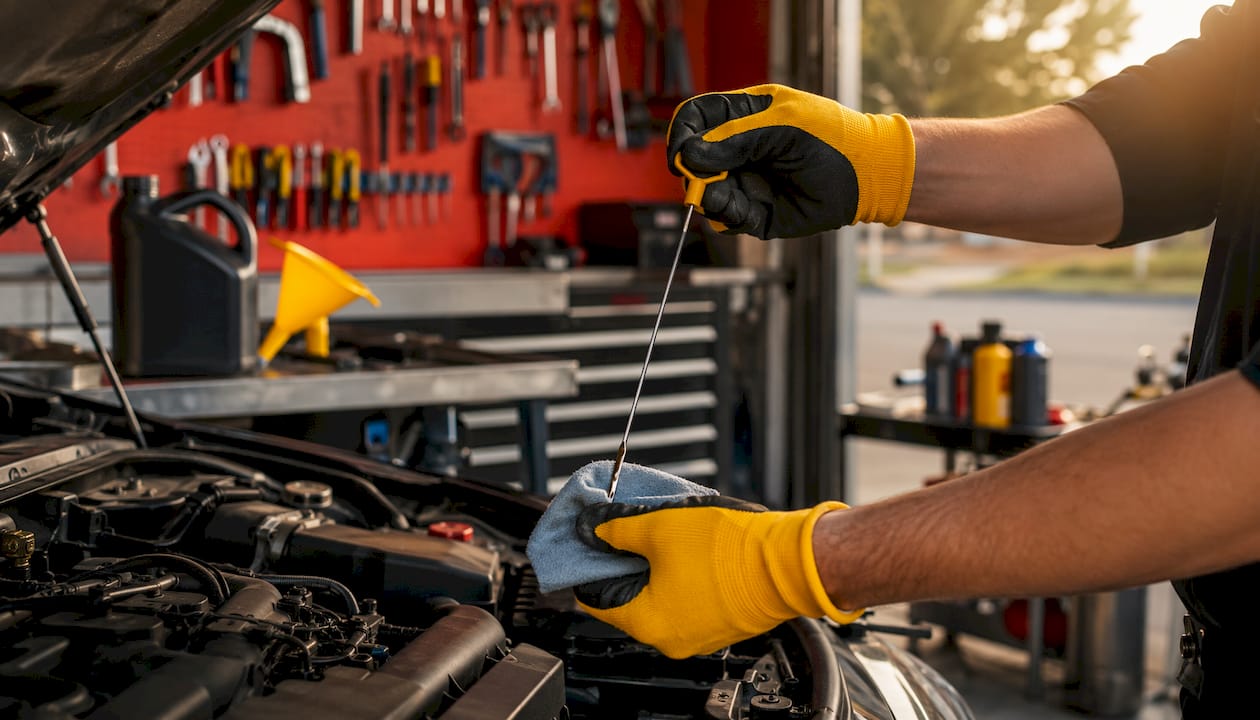
- Oil level check. With the engine off and the car on level ground, pull the dipstick, wipe it clean, reinsert it fully, then pull it again. The oil should sit between the two marks. Dark, gritty oil means a change is overdue. This is a two-minute task that tells you a lot about your engine’s health.
- Washer fluid top-off. The reservoir is usually labeled with a windshield icon. Use the correct formula for the season — a de-icing blend in winter, a standard blend in summer. Never substitute water; it can freeze or leave mineral deposits.
- Wiper blade replacement. Consumer Reports recommends replacing blades every 6–12 months. In hot climates like Haltom City, six months is realistic because heat degrades rubber faster. Most blades snap on and off without tools. A good wiper maintenance guide can walk you through refill options that save money over full replacements.
- Jump-start basics. Keep a set of jumper cables or a compact jump starter in the trunk. Practice the sequence once in a driveway: red to dead, red to good, black to good, black to unpainted metal on the dead car. TFH Safety Solutions recommends pairing this with a practice tire change so young drivers aren’t caught unprepared.
- Battery post check. Look for white or blue-green crust around the terminals. A little corrosion is normal; heavy buildup can prevent the car from starting. A parent or mentor should supervise the first cleaning.
For oil changes specifically, Consumer Reports notes that many newer vehicles with synthetic oil can safely go 7,500–10,000 miles between changes. Low-mileage cars still need an oil change every 6–12 months because oil degrades with time, not just use.
What to leave to the professionals
Brakes, steering, airbags, and complex engine diagnostics must be handled by ASE-certified technicians. These systems have no margin for error, and a misdiagnosis can turn a manageable repair into a dangerous failure.
Watch for these red-flag symptoms and get to a shop immediately:
- Grinding or squealing brakes — pads may be metal-on-metal; driving further causes rotor damage.
- Persistent warning lights — any light that stays on after startup needs a professional diagnosis within 24 hours.
- Coolant leak or sweet smell — cooling system failure is a leading cause of roadside breakdowns.
- Pulling to one side — could be a tire, alignment, or brake issue; all three require shop attention.
- Vibration at highway speed — often a wheel balance or suspension problem that worsens quickly.
The 24-hour rule is firm: if a warning light stays on, a parent or fleet manager should have it checked the same day or the next morning. A cheap sensor fix left alone can become a catastrophic engine or transmission failure within days.
Service intervals, costs, and time expectations
Modern oil-change guidance has changed. Many newer vehicles with synthetic oil can go 7,500–10,000 miles between changes, making the old 3,000-mile rule obsolete for most cars. Low-mileage drivers still need a change every 6–12 months because oil ages regardless of mileage. For a full breakdown by vehicle type, the Express Lube & Car Care multi-vehicle oil change guide covers modern intervals in detail.
| Service | Typical interval | Rough cost range | Shop time |
|---|---|---|---|
| Oil change (synthetic) | 7,500–10,000 miles or 6–12 months | $60 | — |
| Tire rotation | Every 7,500–10,000 miles | $20 | — |
| Brake inspection/pads | — | — | 1–2 hours |
| Battery test/replacement | Every 3–5 years or at first slow start | — | — |
| Wiper blade replacement | Every 6–12 months | $20 | 10–15 min |
Severe driving conditions shorten every interval. Frequent short trips, stop-and-go city traffic, extreme heat, and towing all put extra stress on fluids and components. Haltom City summers qualify as severe duty for wiper blades and cooling systems. See the Express Lube & Car Care mileage-based maintenance schedule for a complete breakdown.
How to read warning lights without panicking
Use a simple three-level framework: green means informational, amber means schedule service soon, red means stop or act immediately.
- Check engine (amber): Schedule a diagnostic within 24 hours. Don’t ignore it, but you can usually drive carefully to a nearby shop.
- Oil pressure (red): Pull over safely and shut the engine off. Driving with low oil pressure can destroy an engine in minutes.
- Battery/charging (amber): Drive directly to a shop. The alternator may not be charging, and the car could stall.
- ABS or brake light (amber/red): Get the brakes inspected before driving in heavy traffic. Stopping distances may be compromised.
- Temperature warning (red): Pull over, turn off the engine, and wait. Never open a hot radiator cap.
False positives happen, especially after a battery replacement or a loose gas cap. If a light comes on and then disappears after one or two trips, note it and mention it at your next service visit. Any light that stays on follows the 24-hour rule: report it to a parent or mechanic the same day.
How parents and fleet managers can build lasting maintenance habits
Routines plus accountability equal prevention. A one-time training session, done right, sets a young driver up for years of reliable habits.
- Demonstrate first. Walk through the 60–90 second pre-drive check yourself while the young driver watches. Narrate each step out loud so they understand the why, not just the what.
- Supervise until competent. Have them complete the check independently three times while you observe. Correct mistakes calmly and specifically. After three successful checks, they own the routine.
- Add it to a shared maintenance log. Use a simple notes app, a shared Google Sheet, or a dedicated maintenance app to track service dates and mileage for each vehicle. Record every oil change, tire rotation, and brake check.
For fleet managers, require digital vehicle inspections with photos for every vehicle at each service visit. This reduces disputes, speeds up triage for urgent issues, and gives you a centralized record by VIN. The Express Lube & Car Care company vehicle checklist is a ready-to-use starting point for fleet programs.
For parents: make the pre-drive check non-negotiable for the first year of driving. Set a monthly phone calendar reminder for tire pressure and oil level checks. Attach the reminder to the first of the month so it never gets forgotten.
Key Takeaways
Young drivers who run a 60–90 second pre-drive check every trip, change oil on modern intervals, and follow the 24-hour warning-light rule avoid the majority of preventable breakdowns and costly repairs.
| Point | Details |
|---|---|
| Pre-drive check | Run a 60–90 second visual check every trip: tires, lights, fluid spots, dashboard, wipers, fuel. |
| Modern oil intervals | Synthetic oil in newer cars lasts 7,500–10,000 miles; low-mileage cars still need a change every 6–12 months. |
| 24-hour warning-light rule | Any dashboard light that stays on must be checked by a parent or mechanic within 24 hours. |
| Leave safety systems to pros | Brakes, steering, airbags, and complex diagnostics require ASE-certified technicians, not DIY attempts. |
| Express Lube & Car Care | Offers same-day oil changes, digital vehicle inspections with photos, and fleet servicing in Haltom City with no appointment required. |
Our perspective on teaching car maintenance
The most underestimated risk for a new driver isn’t a mechanical failure. It’s the assumption that someone else is watching the car. Parents hand over keys and assume the vehicle is fine because it was fine last month. Fleet managers assume drivers will report problems. Neither assumption holds up in practice.
The 60–90 second pre-drive routine matters not because it catches every problem, but because it creates a driver who pays attention. A young driver who checks their tires every morning will notice when one looks low. They’ll notice the new puddle in the driveway. They’ll mention the amber light that appeared yesterday. That awareness is what prevents a $60 oil change from becoming a $4,000 engine repair.
The other point worth making: the 3,000-mile oil rule has been obsolete for years, yet it still drives unnecessary service visits and unnecessary spending. Teaching a young driver the correct interval for their specific vehicle, based on their owner’s manual and driving conditions, is a practical financial lesson as much as a maintenance one. Preventive maintenance is always cheaper than reactive repair.
Express Lube & Car Care is ready to help young drivers in Haltom City
No appointment needed, same-day service, and a transparent process that shows you exactly what your vehicle needs. Express Lube & Car Care provides quick oil changes, brake inspections, digital vehicle inspections with photos, fleet servicing, and repair financing for Haltom City families and fleet managers who need reliable care without the wait.
A digital vehicle inspection gives parents and fleet managers a photo-documented report of every system the technician checks, so there’s no guesswork and no pressure. ASE-certified technicians handle everything from routine oil changes to safety-critical brake and suspension work. If a larger repair comes up unexpectedly, flexible financing options are available so cost doesn’t force a delay on something that affects safety. Stop by or book online at expresslubehaltom.com.
Useful sources and further reading
- National Safety Council — Teen Pre-Drive Checklist: The primary source for the 60–90 second pre-drive habit and everyday check recommendations.
- Consumer Reports — Oil Change Guidance: Updates the 3,000-mile rule with evidence-backed modern intervals.
- Consumer Reports — Car Care Basics for First-Time Owners: Covers DIY tasks vs. professional-only repairs and wiper replacement frequency.
- carmaintenance.app — Teen Driver Car Maintenance Guide: Practical parent-focused guide including the 24-hour warning-light rule and cost-of-neglect data.
- TFH Safety Solutions — Beginner’s Maintenance Checklist: Emergency kit recommendations and practice drill guidance for new drivers.
- Express Lube & Car Care — Multi-Vehicle Oil Change Intervals: Local guidance on updated oil intervals by vehicle type.
- Express Lube & Car Care — Fleet Oil Change Intervals: Fleet-specific interval policies for managers handling multiple vehicles.
FAQ
What should a young driver check before every trip?
Run a 60–90 second walk-around covering tires, lights, under-car fluid spots, dashboard warning lights, wipers, and fuel level. The National Safety Council recommends practicing these checks until they become automatic.
How often does a young driver really need an oil change?
Most newer vehicles with synthetic oil can go 7,500–10,000 miles between changes, according to Consumer Reports. Low-mileage drivers should still change oil every 6–12 months because oil degrades with time even when the car sits.
What warning lights require stopping immediately?
A red oil pressure light or a red temperature warning means pull over and shut the engine off right away. Amber lights like the check engine or ABS light mean drive carefully to a shop and get a diagnosis within 24 hours.
Can a teen safely do any car maintenance on their own?
Yes. Checking tire pressure, reading the oil dipstick, topping washer fluid, and replacing wiper blades are all safe for a young driver to learn with basic guidance. Brakes, steering, and anything requiring the car to be lifted should be handled by a professional.
Where can families in Haltom City get a fast, transparent vehicle inspection?
Express Lube & Car Care offers same-day digital vehicle inspections with photos and no appointment required, so parents and fleet managers can see exactly what technicians find without waiting days for a report.